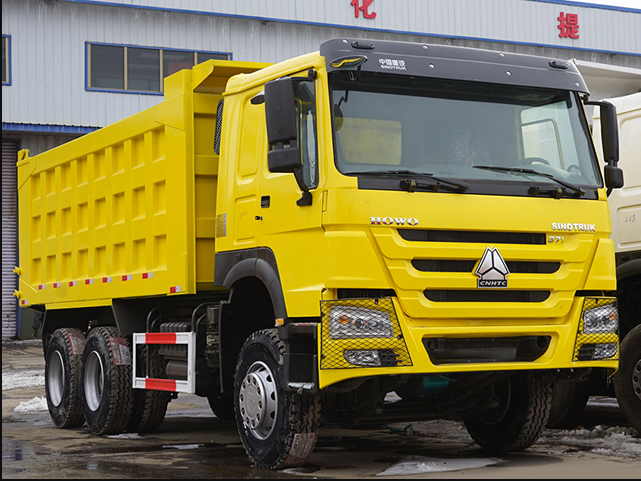
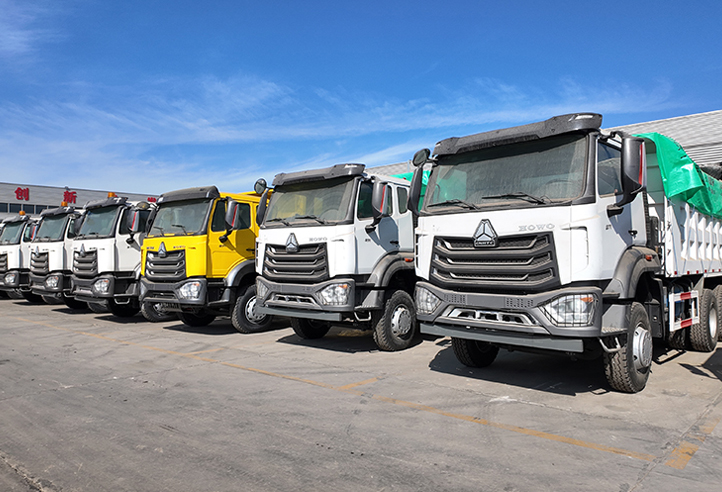
When choosing a SHACMAN dump truck, comparing the model names is only the beginning. The X3000, F3000, and M3000 belong to different product families, but the right choice ultimately depends on the vehicle configuration, operating environment, payload requirements, road conditions, and the condition of the individual truck.
This distinction becomes even more important when buying a used dump truck. A used SHACMAN X3000 may have a different engine, transmission, axle specification, body configuration, or operating history from another X3000. The same applies to F3000 and M3000.
For fleet operators and construction companies, the practical question is therefore not simply “Which SHACMAN model is better?” It is which configuration provides the right combination of payload, power, durability, maneuverability, and operating cost for the project?
The three model families are positioned differently within the SHACMAN range.
The X3000 is generally associated with a more modern, higher-specification platform and is commonly considered for demanding long-haul and heavy-duty applications. The F3000 has a long-established reputation as a work-oriented heavy truck platform and is widely used for construction, mining, and demanding hauling conditions. The M3000 sits between these concepts, combining a practical heavy-duty platform with a relatively modern cab and configuration.
However, the exact specifications depend on the vehicle.
A useful comparison is:
| Factor | X3000 | F3000 | M3000 |
|---|---|---|---|
| Product positioning | Higher-spec heavy-duty platform | Work-oriented heavy-duty platform | Practical modern heavy-duty platform |
| Typical applications | Heavy hauling, construction, demanding transport | Construction, mining, aggregates | Construction and general heavy hauling |
| Cab emphasis | Driver environment and modern equipment | Durability and working practicality | Balance of comfort and utility |
| Common dump configurations | 6x4, 8x4 depending on vehicle | 6x4, 8x4 | 6x4, 8x4 |
| Powertrain choices | Varies by unit | Varies by unit | Varies by unit |
| Used-truck inspection priority | Electronics, drivetrain, chassis | Frame, drivetrain, working components | Overall condition and configuration |
| Best selection method | Match specification to application | Match durability and configuration to duty cycle | Match versatility to project requirements |
This table should be treated as a model-family comparison rather than a fixed technical specification. Used vehicles can differ substantially even when they carry the same model designation.
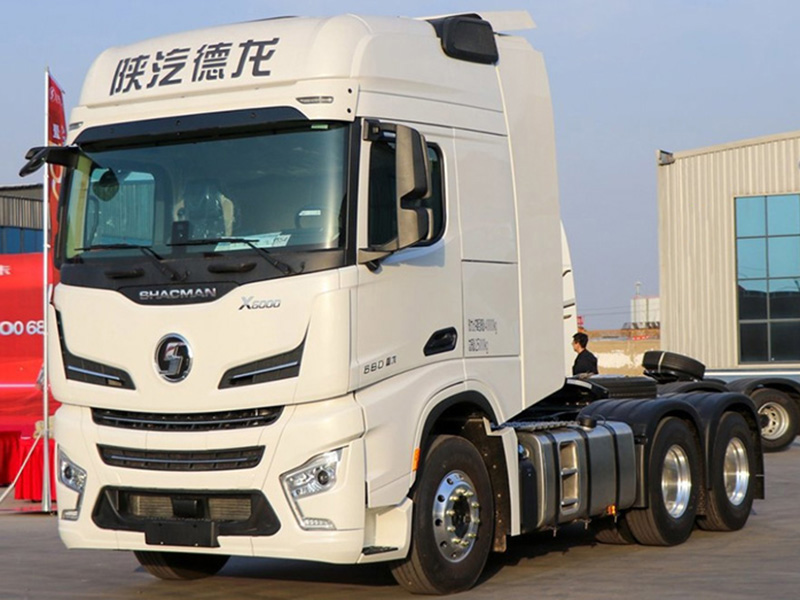
The X3000 is positioned toward demanding heavy-duty operations where power, vehicle equipment, and driver environment are important considerations.
The SHACMAN x3000 range available through Snail Truck includes 8x4 dump truck configurations.
For a referenced X3000 unit, the listed specification includes a 371 HP engine, FAST 12-speed transmission, 300-liter fuel tank, 12R22.5 tires, and a 7.6 × 2.5 × 1.7 m cargo body. Other X3000 configurations can differ, so buyers should always verify the specification of the actual vehicle being purchased.
The X3000 can therefore be considered when the operation requires a substantial heavy-duty chassis combined with a more modern truck platform.
Typical applications may include:
Large construction projects
Aggregate transportation
Quarry operations
Infrastructure development
Heavy bulk-material hauling
For long working shifts, the cab environment can also matter. Driver fatigue, visibility, seat adjustment, control layout, and cab suspension can influence practical productivity even though these factors are not reflected in payload figures.

The F3000 has become a familiar platform in construction and heavy-duty transport, particularly in applications where the truck must withstand demanding working conditions.
The SHACMAN f3000 family covers configurations used for construction and heavy hauling.
Its practical appeal comes from the combination of a heavy-duty chassis, established powertrain configurations, and suitability for demanding work environments.
For buyers of used F3000 dump trucks, the model name should not be treated as proof of condition. A truck that has spent several years hauling overburden in a quarry will have a very different wear profile from an F3000 that primarily operated on paved roads.
When evaluating a used F3000, particular attention should be paid to:
Frame condition
Rear axle and differential
Suspension components
Engine operating condition
Transmission shifting
Dump-body structure
Hydraulic system
Tire wear
Brake components
Evidence of previous overload
The F3000 can make sense when the priority is a proven working platform rather than simply selecting the newest-looking cab.
The M3000 provides another option for operators who need a heavy-duty truck for construction and material transportation while placing importance on a practical cab and balanced configuration.
The SHACMAN m3000 listing includes an 8x4 dump truck configuration.
The referenced unit is specified with a 371 HP engine, FAST 12-speed transmission, 300-liter fuel tank, 12R22.5 tires, and a 7.6 × 2.5 × 1.7 m cargo box.
These specifications demonstrate an important point for used-truck buyers: two model families may have overlapping mechanical specifications.
Therefore, the purchase decision should not be based on the assumption that one model automatically has a stronger engine or larger payload. The actual build sheet and vehicle condition need to be checked.
There is no single answer based solely on the model name.
SHACMAN vehicles can be equipped with different engines and power ratings depending on production year, market, chassis, and application.
For example, a specific X3000, F3000, or M3000 dump truck may be configured with a 371 HP engine, while other units can have different power outputs.
Power should therefore be evaluated together with:
engine torque + transmission ratios + axle ratio + gross vehicle weight + terrain + payload.
Horsepower alone does not determine how effectively a dump truck performs under load.
For steep quarry roads, for example, low-speed torque and appropriate gearing can be more important than simply choosing the vehicle with the highest horsepower figure.
Mining and quarry operations place unusual demands on a dump truck.
Vehicles may operate on:
Unpaved haul roads
Steep grades
Loose aggregate
Mud
Dust
Heavy loading cycles
High ambient temperatures
Repeated full-load operation
The F3000 is commonly associated with demanding work applications, while the X3000 and M3000 can also be configured for heavy-duty dump operations.
Rather than selecting a model solely because it is described as a “mining truck,” fleet managers should examine the complete configuration.
The most important factors include axle capacity, frame strength, tire specification, differential configuration, cooling system, braking system, suspension, dump-body design, and engine/transmission matching.
If the vehicle will operate continuously under high load, the operating environment should be treated as the primary selection criterion.
The X3000's more modern platform can make it attractive when a dump truck or heavy-duty vehicle combines substantial road travel with demanding payload requirements.
However, the distinction between construction hauling and long-distance operation is important.
A dump truck used primarily on public roads may require different priorities from one operating almost entirely inside a quarry.
For road-oriented operation, buyers may place greater emphasis on:
Fuel economy
Cab comfort
Transmission ratios
Highway tire configuration
Braking performance
Driver ergonomics
Service availability
For severe off-road construction work, chassis durability, traction, ground clearance, suspension, and dump-body strength may receive greater priority.
The X3000 should therefore not be selected simply because it occupies a higher position within the product family. The application still determines the appropriate configuration.
Maintenance depends more on the actual powertrain, parts availability, service network, vehicle age, and operating environment than on the model name alone.
For international buyers, this is particularly important.
A truck with an advanced configuration may provide useful features, but if replacement parts are difficult to source in the destination market, downtime can become expensive.
Before purchasing a used SHACMAN dump truck, verify:
Engine model and availability of replacement parts
Transmission model
Axle manufacturer and specifications
Brake components
Electrical and electronic components
Hydraulic-system parts
Tire availability
Local technician familiarity
The best-maintained truck is not necessarily the newest model. A properly refurbished vehicle with accessible parts and a strong service ecosystem can be easier to operate than a more sophisticated truck with limited local support.
For many construction applications, yes.
The dump body directly interacts with the material being transported. Its dimensions, floor thickness, side-wall design, reinforcement, hydraulic system, and unloading angle all affect productivity and durability.
Consider two trucks with identical engines and transmissions.
One may have a lightweight body optimized for general construction materials. The other may have a heavily reinforced body designed for abrasive stone.
They should not be evaluated as equivalent simply because their chassis specifications are similar.
The body should be matched to the material:
| Material | Important Dump-Body Considerations |
|---|---|
| Sand | Volume and weight balance |
| Soil | Body capacity and unloading efficiency |
| Gravel | Abrasion resistance |
| Crushed stone | Floor and side-wall durability |
| Ore | Heavy-duty reinforcement |
| Construction waste | Impact resistance and body structure |
Over-specifying a dump body can unnecessarily increase curb weight. Under-specifying it can result in accelerated structural wear.
The model family is only one part of the purchasing decision.
A 6x4 has three axles and two driven rear axles, while an 8x4 generally has four axles with two driven rear axles.
For many projects, the 6x4 provides a useful balance between maneuverability, traction, chassis weight, and payload.
The 8x4 can be advantageous where higher legal gross weight and greater load distribution are important.
This means an F3000 8x4 and an X3000 6x4 should not be compared only as “F3000 versus X3000.” They represent substantially different operating configurations.
Before choosing the model, determine:
How much material must be moved per cycle?
Then determine:
What axle configuration is legally and operationally suitable?
Only after that should the model family become a major selection factor.
Used heavy-duty trucks should be evaluated as individual machines.
Confirm the VIN/chassis number, engine model, manufacturing information, rated weights, and configuration.
The information should match the seller's documentation.
A cold start can reveal problems that may be less obvious after the engine has warmed up.
Check starting time, idle stability, exhaust smoke, oil pressure, coolant condition, abnormal vibration, and evidence of oil or coolant leakage.
Test gear engagement and shifting behavior.
Listen for unusual noise during acceleration and deceleration. Check for oil leakage around the transmission housing.
Look for:
Cracks
Deformation
Heavy corrosion
Non-factory welding
Accident repairs
Stress around suspension mounting points
Frame inspection is particularly important for dump trucks that have operated under heavy loading cycles.
Check differential housings, seals, oil levels, abnormal noise, and excessive play.
For an 8x4 truck, inspect both steering axles as well as the driven rear axles.
Operate the dump mechanism through its normal range.
Inspect cylinders, hoses, hydraulic pump, control valves, fittings, and mounting points.
A clean-looking body does not guarantee a healthy hydraulic system.
Compare tread wear across all axles.
Uneven wear can indicate alignment, suspension, steering, axle, or loading problems.
A professionally refurbished used truck can be an effective purchasing option, but buyers should understand exactly what has been repaired or replaced.
Ask for:
Before-and-after photos
Replacement-part records
Engine inspection results
Paint/refurbishment details
Road-test information
Current vehicle photos
Chassis and engine numbers
This information is more useful than relying on a generic statement such as “fully refurbished.”
International buyers need to evaluate the truck from both technical and logistical perspectives.
A vehicle specification that works well in China may not be the ideal configuration for Africa, Southeast Asia, the Middle East, or Latin America.
Destination-market considerations include:
Long-distance paved roads require different priorities from mining roads or temporary construction routes.
Cooling requirements, air-conditioning performance, battery specifications, and filtration can become important in hot or dusty environments.
Engine and fuel-system requirements should be considered according to the fuel quality available locally.
A truck is only productive if critical replacement components can be obtained within a reasonable timeframe.
Confirm axle weights, dimensions, emissions requirements, lighting requirements, and registration rules before ordering.
If the truck is part of a larger fleet, its configuration should be compatible with existing trailers, loading equipment, and maintenance procedures.
The decision should be based on the project's actual operating profile.
The X3000 may be appropriate when the buyer places greater emphasis on a modern heavy-duty platform, driver environment, and demanding transport capability.
The F3000 can be considered when a work-oriented heavy-duty platform is required for construction, mining, quarrying, and other demanding applications.
The M3000 can be considered when the buyer wants a practical heavy-duty platform for construction and general material transportation.
These descriptions are not absolute categories. Engine, transmission, axle, cab, body, wheelbase, and production-year differences can significantly change the characteristics of an individual truck.
For this reason, a used SHACMAN should always be evaluated by its actual specification and physical condition, not simply its badge.
The two models target somewhat different product positioning, but there is no universal choice independent of application. Compare the specific engine, transmission, axle configuration, payload, cab equipment, operating environment, purchase price, and maintenance requirements of the actual vehicles.
F3000 configurations are widely associated with demanding construction and heavy-duty applications. For mining, the specific axle ratings, frame, tires, suspension, cooling system, braking system, dump body, and drivetrain should be checked against the site's operating conditions.
They are different SHACMAN product families with different cab and platform characteristics. However, some configurations can have overlapping engine, transmission, axle, and dump-body specifications, so the actual vehicle specification is more informative than the model name alone.
Yes. SHACMAN X3000 dump trucks are available in 8x4 configurations, although the exact engine, power, transmission, body dimensions, and other specifications vary by unit and market.
X3000, F3000, and M3000 can all be configured for heavy construction applications. The appropriate choice depends on payload, road conditions, axle requirements, body type, engine output, and the project's duty cycle.
There is no single inspection point that replaces a complete vehicle assessment. Frame integrity, engine, transmission, axles, suspension, dump body, hydraulics, tires, brakes, and vehicle documentation should all be checked before ordering. Unit-specific photos, videos, inspection records, and refurbishment information can also help verify the truck's actual condition.
Comparing the SHACMAN X3000, F3000, and M3000 is more useful when the comparison moves beyond model names.
The X3000, F3000, and M3000 represent different approaches within the SHACMAN heavy-duty range, but the actual working performance of a dump truck is determined by the complete vehicle configuration.
For buyers, the selection process should start with the project:
application → payload → road conditions → axle configuration → powertrain → dump body → maintenance support → vehicle condition.
A properly matched F3000 can be more appropriate for one operation, while an X3000 or M3000 may make more sense for another. For used equipment, the condition and specification of the individual truck should ultimately be verified before purchase.
Snail Truck provides used HOWO and SHACMAN heavy-duty trucks for international buyers and can help purchasers compare different configurations according to their intended application, rather than relying solely on model names.
 English