Buying a used tractor truck is very different from buying a conventional used vehicle. The truck is not simply a cab and chassis—it is the power unit for an entire transportation system. Engine condition, transmission performance, rear-axle health, fifth-wheel wear, frame integrity, tire condition, and trailer compatibility can all affect whether the vehicle remains productive after delivery.
For international buyers, the inspection process becomes even more important. Once a used HOWO tractor truck has been shipped overseas, correcting a mechanical problem or replacing an unsuitable component can be significantly more expensive than identifying it before ordering.
A professional purchasing process should therefore verify three things at the same time:
What is the truck supposed to be? What condition is it actually in? And is that configuration suitable for the destination market?
The following checklist provides a practical framework for evaluating a used HOWO tractor truck before purchase.
Start with the vehicle's identity and specification rather than the engine.
Before discussing price, confirm the exact truck being offered.
The basic information should include:
Chassis/VIN number
Manufacturing year
Engine model
Engine horsepower
Transmission model
Axle configuration
Rear-axle ratio
Fuel-tank capacity
Tire size
Wheelbase
Fifth-wheel specification
Cab configuration
Vehicle dimensions
Gross vehicle weight
Curb weight
The information should be consistent across the vehicle identification plate, chassis, engine, photographs, inspection documents, and commercial quotation.
This is particularly important for used trucks because two vehicles carrying the same HOWO model name may have different engines, transmissions, axle ratios, production years, and equipment.
A specification sheet should describe the actual unit, not simply the standard configuration of a model family.
The engine is one of the most important components to inspect because a tractor truck can accumulate substantial mileage under high loads.
Do not evaluate an engine only by its appearance. A recently cleaned engine bay may look excellent without telling you much about internal mechanical condition.
Whenever possible, request a genuine cold-start video.
A cold engine can reveal starting problems that may be less obvious after warming up.
Pay attention to:
Starting time
Idle stability
Abnormal vibration
Exhaust smoke
Unusual mechanical noise
Oil pressure
Coolant temperature
Warning lights
The seller should ideally show the truck before starting, then record the complete starting process rather than providing only a short clip after the engine is already running.
Inspect the engine oil for abnormal contamination and ask about the most recent oil change.
Also check for visible leakage around:
Valve covers
Oil pan
Turbocharger area
Oil lines
Seals
Filters
A small amount of external oil residue does not automatically indicate major engine failure, but significant leakage deserves investigation before purchase.
Check the radiator, coolant reservoir, hoses, fan system, and visible connections.
Evidence of coolant leakage, excessive corrosion, or repeated overheating should be treated seriously because cooling problems can become expensive under continuous heavy-duty operation.
Absolutely.
The transmission determines how effectively engine torque reaches the driven axles, particularly when the tractor truck is operating with a heavy trailer.
A used HOWO tractor truck should be checked for:
Smooth gear engagement
Clutch behavior
Abnormal transmission noise
Gear jumping
Oil leakage
High/low range operation where applicable
Reverse gear operation
Clutch pedal condition
A road test is preferable because some transmission problems only become noticeable under load.
During the test, observe whether the truck shifts smoothly during acceleration and deceleration and whether unusual noise changes with vehicle speed or gear selection.
If a road test is impossible, request detailed operating video and maintenance documentation.
The rear axles transfer engine torque to the road and carry a substantial portion of the combined vehicle load.
A tractor truck may appear mechanically sound while having significant wear in its differential or axle components.
Inspect for:
Differential oil leakage
Abnormal gear noise
Housing damage
Excessive play
Seal leakage
Unusual temperature after operation
Signs of previous repairs
The axle ratio also deserves attention.
A ratio suitable for heavy regional hauling may not be ideal for a truck expected to spend most of its time on highways. Conversely, a highway-oriented configuration may not provide the desired low-speed performance for steep or heavily loaded routes.
The right axle ratio depends on the trailer, gross combination weight, terrain, transmission, engine characteristics, and target cruising speed.
The fifth wheel is one of the most frequently overlooked inspection areas when buying a used tractor truck.
It forms the mechanical connection between the tractor and trailer, so wear here can directly affect safety and vehicle behavior.
Inspect:
Fifth-wheel plate
Locking jaws
Kingpin contact area
Release mechanism
Mounting bolts
Mounting brackets
Lubrication
Cracks or deformation
Excessive movement
The locking mechanism should engage correctly with the kingpin and release normally.
Excessive wear around the coupling area can create unwanted movement between tractor and trailer.
The fifth-wheel specification should also match the trailers the buyer intends to use. A tractor truck is not operationally complete until its coupling system is compatible with the trailer fleet.
Frame inspection is essential for a used tractor truck.
The frame carries the engine, cab, suspension, fifth wheel, and other major components. It is also exposed to repeated loading forces during acceleration, braking, cornering, and trailer operation.
Look for:
Cracks
Bends
Deformation
Heavy corrosion
Non-factory welding
Reinforcement plates
Accident-repair evidence
Damage around suspension mounting points
Damage around fifth-wheel mounting areas
Fresh paint can make previous repairs difficult to see.
For this reason, buyers should request detailed chassis photographs before ordering and, where possible, an independent inspection.
A frame that has been repaired is not automatically unacceptable. The important question is what happened, where the repair was made, how it was performed, and whether the structural integrity has been properly restored.
Tires are both a safety component and a direct operating expense.
Replacing a complete set of heavy-truck tires after delivery can significantly increase the effective purchase cost.
Inspect:
Tread depth
Sidewall condition
Uneven wear
Cracks
Bulges
Puncture repairs
Tire age
Matching specifications
Inflation condition
Uneven tread wear can also indicate an underlying mechanical problem.
For example, abnormal wear may be associated with alignment, steering, suspension, axle, or load-distribution issues.
Therefore, tire inspection should not stop at asking whether the tires are “good.”
The buyer should ask why they have worn the way they have.
The steering system directly affects vehicle control, particularly when the tractor is pulling a heavy trailer.
Inspect:
Steering wheel free play
Steering gearbox
Tie rods
Ball joints
Steering linkage
Power-steering system
Front axle components
Leaf springs
Bushings
Shock absorbers
Suspension mounting points
The vehicle should maintain stable steering without excessive wandering or abnormal vibration.
Suspension components should also be checked for cracks, deformation, leakage, and excessive wear.
For trucks that have operated on poor roads, suspension and steering components deserve additional attention.
Cab condition can reveal both operating history and the quality of refurbishment.
Inspect:
Driver's seat
Instrument cluster
Air-conditioning system
Heater
Windows
Door locks
Wipers
Lighting
Dashboard warning indicators
Horn
Electrical switches
Sleeper area where applicable
More importantly, turn on the electrical systems rather than judging them visually.
Check whether warning lights behave normally during startup and whether the instrument cluster displays fault codes.
For a truck expected to operate long distances, air-conditioning and cab comfort are not minor features. Driver working conditions can affect the practicality of the vehicle over extended operating cycles.
Refurbishment is common in the used heavy-truck market, but “refurbished” can mean very different things.
A superficial refurbishment may involve:
Washing
Repainting
Interior cleaning
Replacing inexpensive cosmetic parts
A more comprehensive refurbishment can involve:
Mechanical inspection
Chassis repair
Engine inspection
Transmission inspection
Axle service
Brake-system checks
Suspension repairs
Electrical-system checks
Body repair
Road testing
The buyer should therefore ask for evidence.
Useful documentation includes:
Before refurbishment → repair scope → replacement parts → inspection results → road test → final vehicle photos.
If a seller cannot clearly explain what was refurbished, the term “refurbished” provides limited purchasing information.
A tractor truck can operate under substantial combined weight, making braking performance critical.
Inspect the complete braking system, including:
Brake chambers
Air compressor
Air tanks
Air hoses
Valves
Brake drums or discs, depending on configuration
Brake linings/pads
ABS components where fitted
Air-pressure behavior
Check whether the air system reaches operating pressure normally and whether pressure drops excessively when the truck is parked.
Listen for abnormal air leakage.
A road test should also evaluate braking stability and response.
For international buyers, the brake specification should be checked against the destination country's regulatory requirements before shipment.
Yes.
The fuel tank affects both operating range and vehicle packaging.
Check:
Tank capacity
Tank condition
Mounting brackets
Corrosion
Leakage
Fuel-cap condition
Fuel-line connections
For example, a referenced HOWO T7H used 6x4 tractor configuration listed by Snail Truck has a 400-liter fuel tank, but specifications can differ among individual trucks and production configurations.
Therefore, the actual vehicle's fuel-tank capacity should be confirmed before ordering rather than inferred from the model name.
The operating application should determine the configuration.
A tractor truck is fundamentally different from a rigid dump truck because its productivity depends on the combination of tractor, trailer, cargo, road conditions, and legal gross combination weight.
For many heavy-duty applications, a 6x4 tractor configuration offers a useful balance of traction and load-carrying capability.
A HOWO 6x4 tractor truck can be considered for heavy-duty transport where two driven rear axles are appropriate for the operating environment.
The buyer should then determine whether the truck will mainly operate on:
Highways
Regional roads
Construction routes
Mining roads
Mixed paved and unpaved roads
Long-distance international routes
The same 6x4 configuration can perform differently depending on engine, transmission, axle ratio, tire specification, and trailer combination.

The HOWO T7H is one of the configurations buyers may consider when looking for a heavy-duty tractor truck.
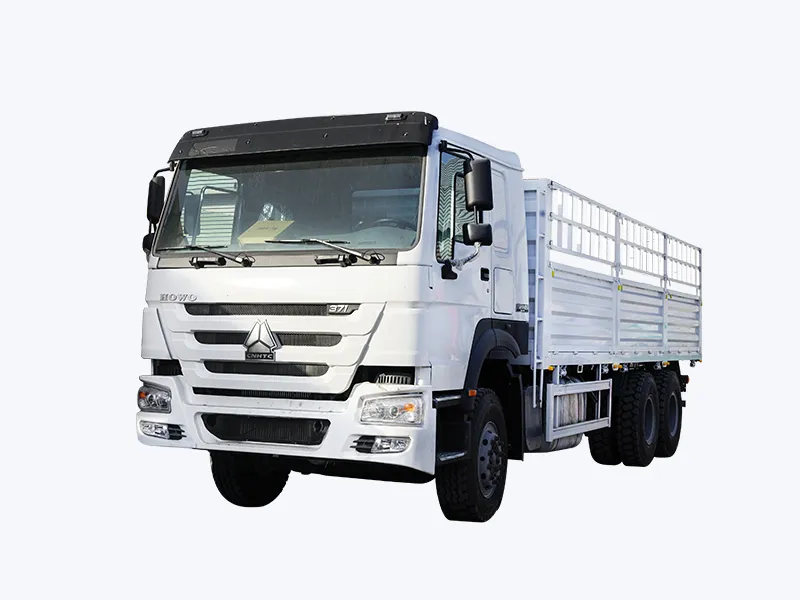
A referenced HOWO t7h unit is listed as a 6x4 tractor with a 371 HP engine, HW19710 transmission, 12R22.5 tires, and a 400-liter fuel tank.
The same page emphasizes inspection of the specification plate, engine, transmission, rear axle, frame, fifth wheel, tires, and leakage points before purchasing a used vehicle.
These details illustrate why buyers should evaluate the actual unit rather than assuming every T7H has identical specifications.
For long-distance transport, the buyer should additionally consider fuel range, driver comfort, highway gearing, braking performance, trailer compatibility, and service support along the intended route.
A tractor truck must be evaluated together with the trailer.
Before ordering, confirm:
Fifth-wheel height
Fifth-wheel load rating
Kingpin compatibility
Trailer type
Trailer length
Gross combination weight
Electrical connections
Air-brake connections
Axle-load distribution
Local dimensional restrictions
The tractor should provide sufficient performance for the intended combination.
A truck may operate acceptably without a trailer during a test but behave very differently when connected to a fully loaded trailer.
This is why the intended trailer should be defined before finalizing the tractor specification.
Documentation is part of the inspection.
International buyers should request, where available:
Chassis/VIN information
Engine number
Vehicle specification sheet
Manufacturing information
Maintenance records
Refurbishment records
Inspection report
Road-test information
Current photos
Current videos
Commercial invoice information
Export documentation
Shipping information
The chassis number should remain consistent across the physical truck and relevant documents.
If photographs show one truck while the specification sheet describes another configuration, the discrepancy should be resolved before payment.
A professional remote inspection should cover more than polished marketing photographs.
Request clear images of:
Front of the truck
Rear of the cab
Both sides
Chassis
Engine bay
Engine identification plate
Vehicle specification plate
Transmission
Rear axles
Fifth wheel
Tires
Dashboard
Odometer
Interior
Fuel tank
Frame rails
Suspension
Any repaired areas
For videos, ask for:
Cold engine start
Engine idling
Dashboard startup
Gear shifting
Steering operation
Brake-system operation
Road test
Fifth-wheel operation where possible
The purpose is not to collect more photographs for their own sake. It is to make the actual vehicle easier to verify before the buyer commits funds.
Several warning signs deserve additional investigation.
If the chassis number, engine information, photographs, and documents do not match, stop the purchasing process until the discrepancy is explained.
A newly painted frame or chassis is not necessarily a problem, but it can make previous structural repairs harder to identify.
Small residues can occur on older trucks, but substantial or unexplained leakage should be investigated.
Uneven wear can indicate steering, suspension, axle, or alignment problems.
Non-factory welding on the frame or fifth-wheel mounting area should be examined carefully.
If the truck cannot be started cold for inspection, the buyer has less information about its actual starting and idle behavior.
Generic model photographs do not establish the condition of the actual truck being sold.
“Fully refurbished” should be supported by a defined repair scope and evidence.
For an international used-truck purchase, independent inspection can provide an additional layer of verification.
A third-party inspector can examine the physical vehicle and document findings before shipment.
The inspection scope can include:
Chassis
Engine
Transmission
Axles
Suspension
Steering
Brakes
Tires
Electrical system
Fifth wheel
Frame
Vehicle identification
Exterior condition
This is especially useful when the buyer cannot physically visit the supplier.
The inspection should be completed on the specific chassis being purchased, not simply on a representative model.
The purchase price is only one part of the total cost.
International buyers should consider:
Truck price + refurbishment + inspection + inland transportation + export charges + shipping + insurance + customs + taxes + destination transportation + initial maintenance.
A truck that appears cheaper at the supplier's yard may not have the lowest total landed cost.
The condition of consumable components should also be considered.
For example, if the truck requires immediate replacement of multiple tires, batteries, brake components, or suspension parts, those costs should be incorporated into the purchasing calculation before comparing suppliers.
Before placing an order, buyers can use the following checklist:
| Inspection Area | What to Verify |
|---|---|
| Vehicle identity | VIN, chassis number, engine number |
| Engine | Cold start, smoke, leaks, idle, noise |
| Transmission | Gear shifting, clutch, leakage |
| Rear axle | Noise, differential, seals, oil |
| Frame | Cracks, deformation, corrosion, welding |
| Fifth wheel | Locking mechanism, wear, mounting |
| Tires | Tread, age, damage, uneven wear |
| Steering | Free play, linkage, steering response |
| Suspension | Springs, bushings, shocks, mounting points |
| Brakes | Air system, chambers, valves, braking response |
| Cab | AC, instruments, warning lights, electrical system |
| Fuel system | Tank, lines, leakage |
| Refurbishment | Repair scope and replacement records |
| Documents | VIN and specification consistency |
| Trailer compatibility | Fifth wheel, weight, dimensions, connections |
| Export suitability | Destination regulations and shipping requirements |
The most important approach is a complete inspection rather than focusing on one component. Engine, transmission, axles, frame, fifth wheel, brakes, suspension, tires, and documentation should all be checked because problems in any of these areas can affect operating cost and safety.
Request unit-specific photos and videos covering the chassis number, specification plate, engine, transmission, axles, frame, fifth wheel, tires, dashboard, and interior. A cold-start video and road-test video can provide additional information. For higher-value orders, an independent inspection can provide further verification.
A 6x4 configuration provides two driven rear axles and is widely used for heavy-duty transport. Whether it is suitable for a particular load depends on the truck's axle ratings, engine, transmission, trailer, gross combination weight, road conditions, and local regulations.
Check the fifth-wheel plate, locking jaws, kingpin contact area, release mechanism, mounting bolts, brackets, lubrication, cracks, deformation, and excessive movement. The fifth wheel should also be compatible with the intended trailer.
Ask for a defined refurbishment scope and evidence such as before-and-after photos, replacement records, inspection results, and road-test information. Cosmetic repainting alone should not be treated as proof of comprehensive mechanical refurbishment.
Yes. Inspection before shipment gives the buyer an opportunity to identify discrepancies while the vehicle is still at the supplier's location. This is particularly valuable for international purchases because correcting mechanical or specification problems after delivery can be considerably more difficult and expensive.
A used HOWO tractor truck should be purchased as a working transportation system, not simply as a second-hand vehicle.
The engine and transmission are important, but they are only part of the inspection. Frame integrity, rear axles, steering, suspension, braking, fifth-wheel condition, tires, documentation, refurbishment quality, and trailer compatibility can all affect the truck's performance after delivery.
For international buyers, the safest purchasing process is to verify the actual chassis, document its condition, confirm the specification against the intended application, and resolve discrepancies before payment and shipment.
Snail Truck offers used HOWO tractor trucks in different configurations for international buyers. When comparing available units, the focus should remain on the specific truck's condition, configuration, intended workload, and destination-market requirements.
A detailed pre-order inspection can turn a used-truck purchase from a model-based decision into a condition-based and application-based procurement decision—which is ultimately much more useful for long-term fleet operation.
 English