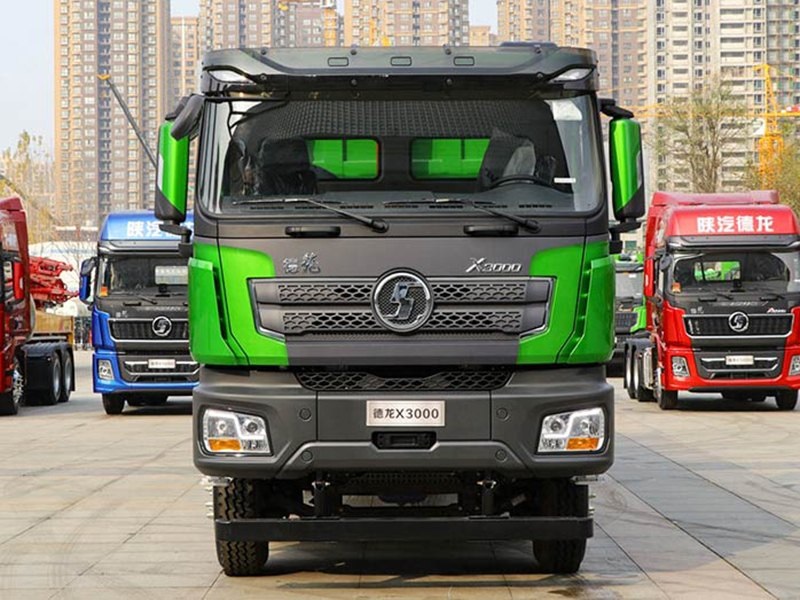
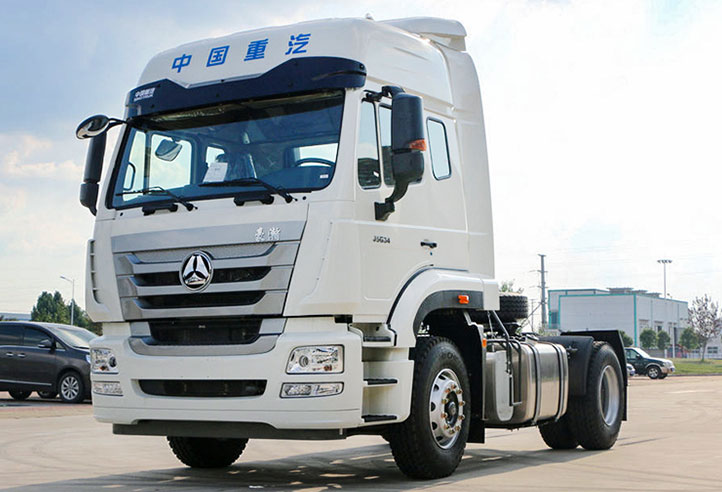
In 2026, construction fleets in Africa and Southeast Asia are balancing uptime needs with tight capital budgets, tough road conditions, and limited service infrastructure in remote areas. For many contractors, a well-selected used truck offers the best ROI — especially when the platform is proven, parts are accessible, and repairs can be handled locally. This guide explains why buyers often choose SinoTruck options through partners like Snail Truck, and how to source pre-owned units without inheriting hidden maintenance costs.
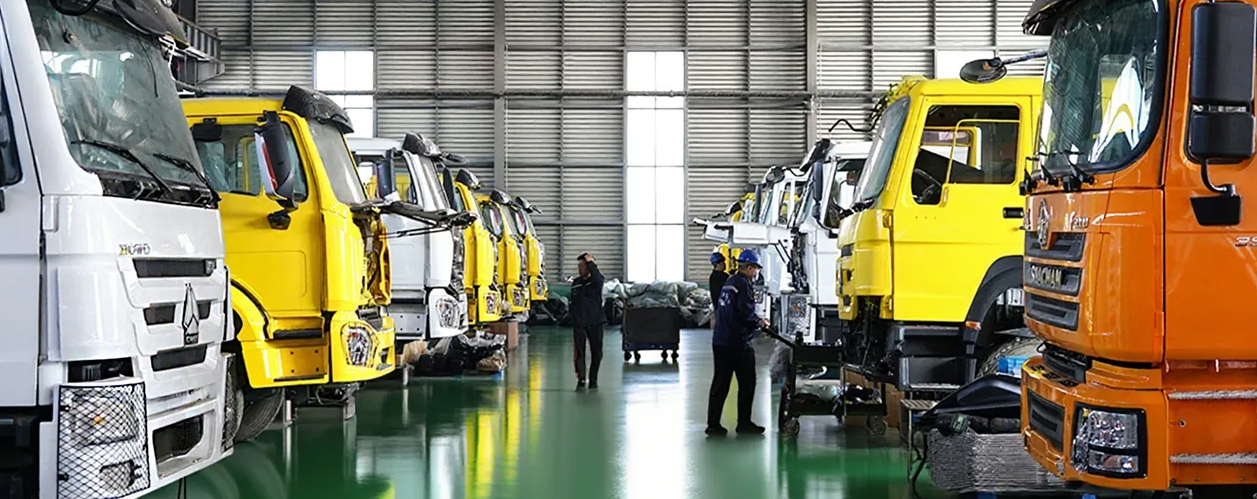
Construction fleets in emerging markets operate in conditions that would stress any equipment — and expose the real performance difference between a truck built for local operating reality and one specified for ideal conditions.
| Operating Challenge | Impact on Truck Requirements |
|---|---|
| Unpaved and damaged roads | Higher suspension fatigue, more frequent alignment and bushing wear |
| Overloading as standard practice | Frame, axle, and drivetrain stress far above nominal rating |
| Variable fuel quality | Fuel system sensitivity is a major failure driver — simpler fuel systems tolerate this better |
| Remote worksites with no dealer proximity | Roadside repair capability matters more than features |
| High ambient temperatures | Engine cooling and electrical system heat tolerance |
| Limited trained technicians | Simpler systems that experienced mechanics can diagnose without specialized equipment |
A truck with a sophisticated emissions system, complex electronic controls, and proprietary diagnostic requirements becomes an expensive liability when the nearest authorized service center is 400 km away. Contractors in these markets often choose platforms specifically because local mechanics know them, parts are available in the nearest city, and breakdowns can be resolved with basic tools.
SinoTruck platforms — HOWO, Steyr, and related configurations — have been in operation in Africa and Southeast Asia long enough to develop this local parts and knowledge ecosystem.
| Financial Factor | New Truck | Well-Selected Used Truck |
|---|---|---|
| Purchase price | Full market price | Typically 40–65% of new equivalent |
| Year 1–3 depreciation | Steepest value loss | Already through the steepest curve |
| Break-even per job | Longer — higher cost to recover | Faster — lower capital base |
| Fleet expansion cost | Buy 2 new trucks | Buy 3–4 used trucks for the same capital |
| Financing pressure | Higher monthly payment | Lower or self-funded |
The capital freed by choosing used over new rarely sits idle:
Larger fleet for the same budget — more capacity means more billable work
Spares inventory funded upfront — fast-moving wear parts stocked before the truck leaves port
Maintenance capability investment — workshop equipment, trained mechanics, and consumable stock
Purchase price + refurbishment cost + first-year maintenance estimate divided by billable days per year at the expected day rate equals payback period in years. A well-selected used truck at 50% of new cost with similar utilization typically pays back in under half the time of the new equivalent.
| System | What to Check | Red Flag |
|---|---|---|
| Engine | Idle stability, blue smoke at startup, oil consumption, coolant condition | Persistent smoke, heavy oil consumption, overheating history |
| Transmission | Clean shifts through all gears, no slipping or grinding | Difficult engagement, slipping under load, unusual noise |
| Differentials | No whine or clunk under load, oil level and condition | Differential noise under load is expensive to repair |
| Brakes | Stroke, wear on pads/shoes, air system pressure retention | Excessive stroke, slow pressure build, air leaks |
| Frame | Visual inspection for cracks at stress points, repair welds | Any frame crack, particularly at cab mounting and fifth wheel area |
| Suspension | Bushing condition, leaf spring cracks, ride height | Collapsed springs, cracked leaves, worn-out bushings |
| Steering | Play at the wheel, straight-line tracking, hydraulic assist function | Excessive play, pulling, or heavy steering |
| Tyres | Tread depth, sidewall condition, age | Sidewall cracking, uneven wear indicating alignment problems |
Service history records — mileage, major repairs, and scheduled maintenance
VIN verification against the documentation — confirm the number matches the registration and engine plate
Export paperwork confirming legal export authorization from the source country
Refurbishment scope — what was done, what parts were replaced, and what was not addressed
Pre-shipment inspection report from a qualified third-party inspector
Cold start test: observe the engine from cold — smoke color, idle stability, oil pressure rise
Load test: drive the truck under a representative payload; confirm power delivery, transmission behavior, and brake performance
Leak inspection: after the road test, check under the engine, transmission, and differentials for active leaks
ECU/diagnostic scan: where scan tools are available and compatible, pull fault code history before purchase
The single most important factor in running a used truck fleet in Africa or Southeast Asia is not the truck's specification — it is whether you can get parts in your operating region within a reasonable time and cost.
| Platform Selection Factor | Impact on Uptime |
|---|---|
| High market penetration | More spare parts importers and stockists; lower prices from competition |
| Mechanic familiarity | Local technicians have seen the failure modes and know the fixes |
| Standardized components | Filters, belts, and brake parts often shared across model years — easier to stock |
| Long production history | Aftermarket parts from multiple suppliers; not solely dependent on OEM |
Preventive schedule: define service intervals in operating hours, not calendar days — a truck working 14-hour days accumulates hours faster than a monthly service interval assumes
Fluids and filters discipline: engine oil, fuel filters, and air filters are the highest-impact consumables in terms of engine life — contaminated fuel and oil are the primary cause of premature engine wear in these markets
Driver training: drivers who understand how to manage gear changes on grades, avoid aggressive braking, and recognize early fault symptoms reduce repair frequency significantly
Avoid overloading: the single biggest shortener of truck life in construction markets — even occasional overloading events accelerate frame fatigue and drivetrain wear
| Category | Specific Items |
|---|---|
| Filters | Engine oil, fuel primary and secondary, air, hydraulic (if applicable) |
| Belts | Alternator, fan, power steering, timing (if applicable) |
| Brakes | Brake lining/pads, spring brake chambers |
| Electrical | Alternator, starter motor fuses, bulbs |
| Cooling | Thermostat, water pump, hoses |
| Job Type | Recommended Configuration | Key Spec |
|---|---|---|
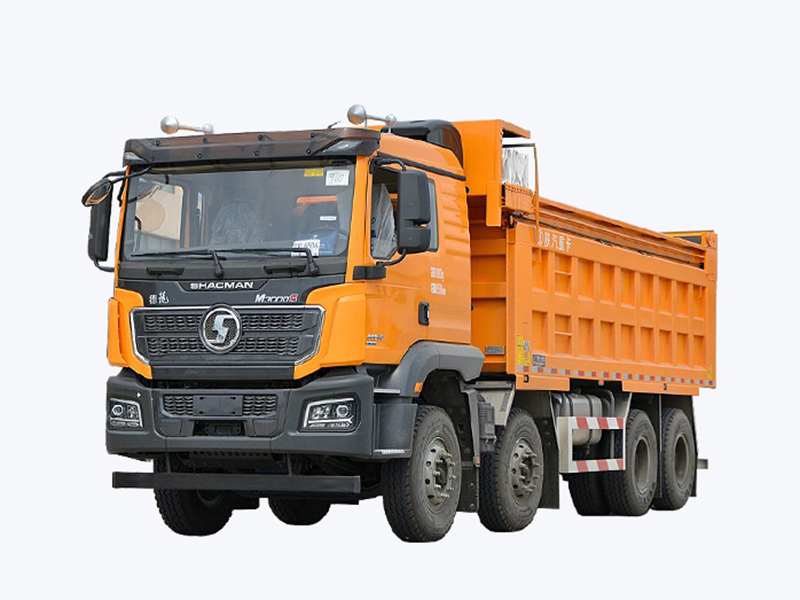
| Earthwork and site excavation | 6×4 or 8×4 dump truck | 20–40 tonne payload; reinforced dump body; air suspension optional |
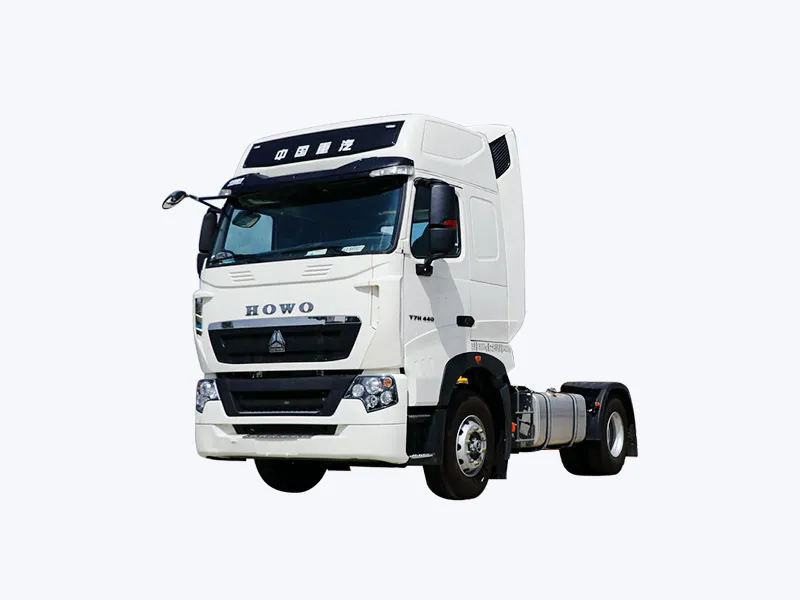
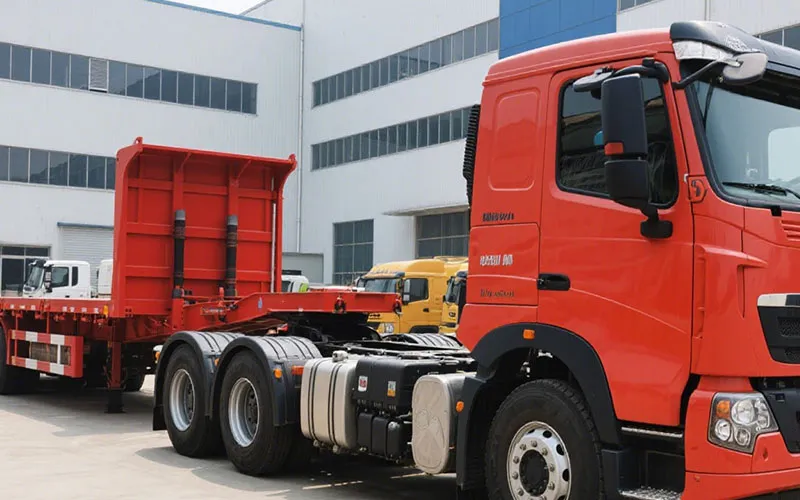
| Long-haul material transport | Tractor unit with semi-trailer | 6×4 tractor; 12–16 speed gearbox; fifth wheel height match trailer |
| Concrete logistics | Mixer truck | 8×4 chassis; 6–9 m³ drum; hydraulic PTO; water tank |
| Mixed terrain hauling | 6×6 or all-wheel-drive configuration | Higher ground clearance; diff locks; heavier axle rating |
Axle configuration: 6×4 is the most common and most serviceable; 8×4 provides better load distribution for heavy hauling on poor roads
Gearbox: manual gearbox is preferred in markets with limited automatic transmission repair capability — simpler and more field-repairable
Suspension: leaf spring is simpler and more robust for rough terrain; air suspension offers better ride quality but adds complexity
Body reinforcement: dump bodies specified for abrasive material should have wear-resistant liners or reinforced floor and tailgate
Pre-shipment inspection: commission a qualified inspector before payment is released — this is the last opportunity to reject a unit before it ships
Parts kit: include a first-service kit (oil, filters, belts) in the shipment — reduces the time to first service and ensures correct parts are available locally on arrival
After-sales support: confirm the exporter can supply spare parts for the specific model, not just general SinoTruck parts — some model-specific components require sourcing from specific channels
In demanding construction environments, the best truck is the one that stays working with minimal unplanned downtime. For many contractors in Africa and Southeast Asia, a well-selected used truck — especially a proven SinoTruck platform — delivers strong ROI through manageable upfront cost, parts availability, and mechanic familiarity. By sourcing through experienced exporters like Snail Truck and applying a strict pre-purchase inspection discipline, buyers can capture the reliability advantage without inheriting the previous owner's deferred maintenance.
Q1: Why do construction firms in Africa and Southeast Asia choose used trucks over new ones?
Used trucks reduce upfront capital commitment and depreciation risk, allowing faster payback on each unit and more fleet capacity for the same budget. In markets where road conditions, overloading practices, and limited service infrastructure create higher-than-normal wear rates, the lower capital at risk per truck also means the financial consequence of a major repair or write-off is proportionally lower.
Q2: What should I inspect first when buying a used truck for construction work?
Prioritize the engine (cold start behavior, oil consumption, smoke color), transmission (shift quality through all gears under load), differential condition (noise under load), brake system (stroke, pressure retention, lining condition), and frame integrity (visual inspection for cracks at high-stress points). These are the systems where repair costs are highest and where prior abuse or deferred maintenance is most likely to be hidden.
Q3: Are used SinoTruck platforms easy to maintain in Africa and Southeast Asia?
In many markets across both regions, SinoTruck platforms — particularly HOWO variants — have achieved sufficient market penetration that local parts importers stock common wear items and local mechanics have hands-on experience with the failure modes. This makes SinoTruck platforms genuinely easier to maintain remotely compared to less common platforms where parts must be imported specifically and mechanics learn on the job.
Q4: How can I reduce the risk of importing a used truck with hidden problems?
Commission a pre-shipment inspection by a qualified independent inspector before payment is released. Require a documented refurbishment scope from the seller. Request full service history and VIN verification against all documentation. Conduct a road test under load and a cold start test. Pull a diagnostic fault code history if a compatible scan tool is available.
Q5: What information do I need to request a used truck quotation?
Truck type (dump, tractor, mixer), required axle configuration, payload capacity, preferred engine and gearbox specification if applicable, destination port, quantity, budget range, any specific refurbishment requirements, and whether you want a parts kit included in the shipment.
 English