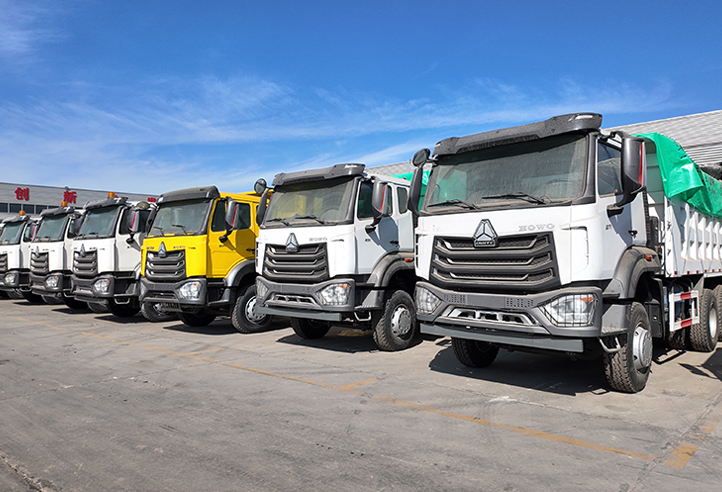
In 2026, infrastructure contractors across Africa and Southeast Asia are operating under a set of financial pressures that did not exist at the same intensity five years ago. Global economic volatility has tightened project financing. Currency fluctuations have increased the real cost of imported equipment. Development bank lending conditions have become more demanding. And project timelines — already compressed by competitive bidding — leave little room for equipment delays or budget overruns.
Against this backdrop, the decision of which trucks to put on a construction site, mining operation, or road-building project has become a capital allocation decision as much as a technical one. Contractors need equipment that can start generating revenue quickly, survive rough terrain without constant breakdowns, and recover its purchase cost before the project cycle ends. The howo dump truck has become the default answer to this requirement across dozens of markets — not because it is the cheapest option available, but because it delivers the most practical combination of load capacity, chassis durability, parts availability, and total cost of ownership for the environments where African and Southeast Asian infrastructure projects actually operate.
For buyers actively searching for a used Howo dump truck for sale, this guide covers the complete sourcing picture: why used HOWO units outperform new trucks on ROI in 2026, how to evaluate key components before purchase, how to compare 6x4 versus 8x4 configurations for different project types, and how to work with a reliable supplier like Snail Truck to reduce sourcing risk. Keywords relevant to this decision — used Howo dump truck for sale, heavy-duty tipper truck ROI, Howo 6x4 dump truck wholesale, and reliable Chinese trucks 2026 — are addressed throughout.
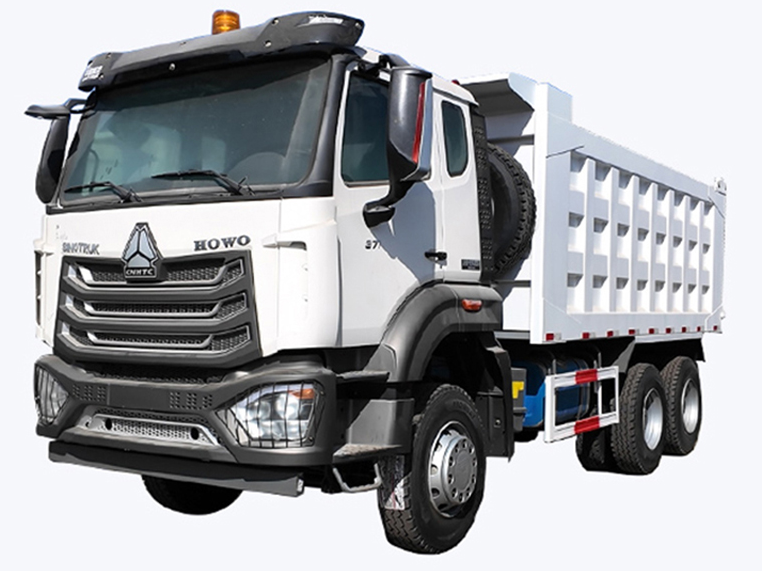
To understand why the howo dump truck dominates procurement decisions in Africa and Southeast Asia, it helps to start with what the product actually is and what problem it solves better than the alternatives.
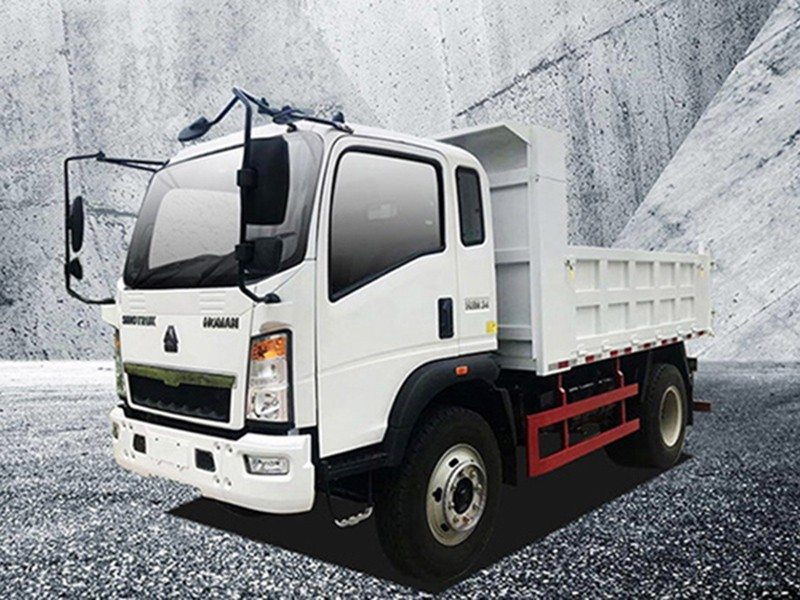
A howo dump truck is a heavy-duty tipper truck manufactured under the HOWO brand by Sinotruk, one of China's largest commercial vehicle manufacturers. It is designed for high-volume earthmoving, sand and gravel transport, mining material hauling, road base construction, and bulk infrastructure logistics. The truck's defining characteristics are its reinforced heavy-duty chassis, high-torque diesel engine, hydraulic tipping system, and load-bearing axle configurations — typically 6x4 for medium-heavy applications and 8x4 for maximum payload requirements.
What makes the howo dump truck particularly relevant in 2026 is not just its technical specification — it is the combination of that specification with a global parts network that has matured significantly over the past decade. In markets like Nigeria, Kenya, Tanzania, Ethiopia, Ghana, Indonesia, Vietnam, Cambodia, and the Philippines, HOWO spare parts are available through established local distributors. This means that when a truck requires maintenance or repair, contractors are not waiting weeks for components to arrive from China. Downtime is shorter, maintenance costs are more predictable, and fleet managers can plan servicing schedules with greater confidence.
This parts availability advantage is one of the primary reasons used Howo dump truck for sale listings attract serious buyers rather than just price-sensitive ones. A contractor who has operated HOWO trucks on previous projects understands that the total cost of ownership — not just the purchase price — is where the real financial advantage lies. Reliable Chinese trucks 2026 are no longer a compromise choice. For many experienced infrastructure operators, they are the first choice.
The demand profile for used HOWO units in 2026 spans a wide range of buyer types:
Road construction contractors working on government-funded highway and rural access projects
Mining and quarry operators extracting aggregate, coal, iron ore, and other bulk materials
Real estate and urban development contractors managing large earthmoving volumes
Government fleet procurement programs seeking cost-effective tipper truck solutions
Equipment dealers and resellers building inventory for regional distribution
Each of these buyer categories has a different priority weighting between price, payload, configuration, and parts support — but all of them benefit from the core value proposition that the howo dump truck delivers.
The financial case for choosing a used howo dump truck over a new unit in 2026 is straightforward when you calculate it at the fleet level rather than the individual unit level.
According to Snail Truck's used HOWO dump truck program, used units can save buyers up to 50% compared with new trucks, with typical per-unit savings in the range of $15,000 to $25,000. For a contractor building or expanding a fleet, this differential compounds quickly into a significant capital advantage.
Consider a practical CAPEX comparison:
10-truck fleet scenario:
Estimated savings versus new units: $150,000 to $250,000
That capital can be redirected toward fuel reserves, driver wages, maintenance budgets, or additional equipment
20-truck fleet scenario:
Estimated savings versus new units: $300,000 to $500,000
At this scale, the savings represent the equivalent of two to four additional trucks purchased at no extra budget cost
This is the core principle behind heavy-duty tipper truck ROI analysis for infrastructure projects. The question is not simply "how much does the truck cost?" — it is "how quickly does the truck pay back its purchase cost through productive work, and how much capital is freed up for other project needs?"
Used HOWO dump trucks accelerate the payback cycle in several ways:
Lower depreciation pressure — A used truck has already absorbed the steepest portion of its depreciation curve. The buyer does not pay for the value loss that occurs in the first two to three years of a new vehicle's life.
Faster break-even point — With a lower initial investment, the number of operating hours required to recover the purchase cost is significantly reduced. On a typical road construction or mining project, a used howo dump truck can reach break-even faster than a new unit purchased at full price.
Better cash flow management — The capital saved on truck acquisition can be deployed toward operational costs — fuel, tires, lubricants, driver salaries — that directly affect daily productivity. A contractor who spends less on trucks has more working capital available to keep the project moving.
Fleet expansion under the same budget — Instead of purchasing five new trucks, a contractor can purchase eight to ten used HOWO units for the same total investment. More trucks on site means higher daily output, faster project completion, and stronger competitive positioning for future bids.
For buyers evaluating Howo 6x4 dump truck wholesale pricing or comparing used versus new options, the ROI calculation consistently favors used units for projects where the payback cycle is measured in months rather than years.
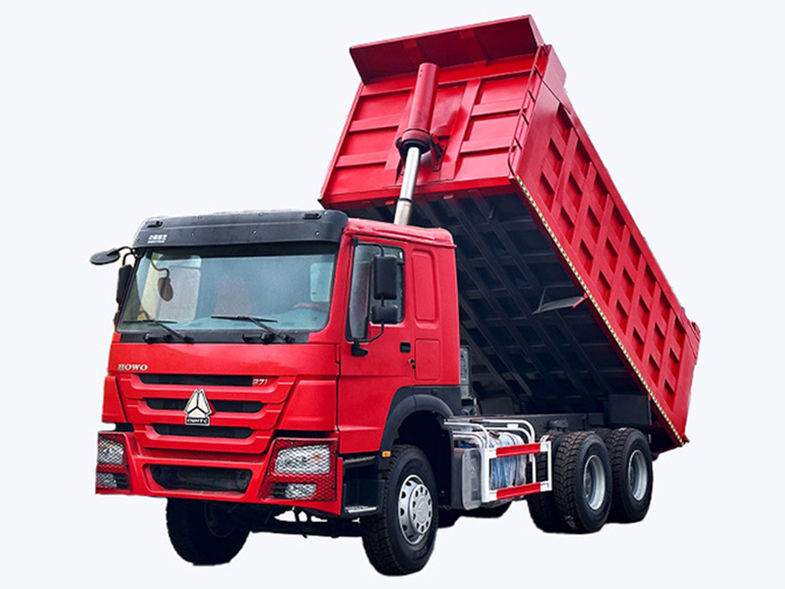
Purchasing a used howo dump truck without a structured inspection process is one of the most common and costly mistakes infrastructure buyers make. A truck that looks acceptable in photographs may have hidden issues in the hydraulic system, chassis, or engine that will generate significant repair costs within the first few months of operation.
Here is a component-by-component breakdown of what to evaluate:
Chassis Integrity The heavy-duty chassis is the structural foundation of the howo dump truck and the component most directly affected by years of rough-terrain operation. Buyers should check for cracks, weld repairs, frame deformation, and corrosion — particularly around the rear axle mounting points and the hydraulic cylinder attachment brackets. A compromised chassis cannot be economically repaired and will create ongoing structural problems under heavy loads.
Engine Condition and Performance The engine is the most expensive single component in the truck. Buyers should request documentation of engine hours, service history, and any major repairs. A compression test and visual inspection for oil leaks, coolant contamination, and exhaust smoke color can reveal the engine's actual condition more accurately than mileage figures alone. For reliable Chinese trucks 2026, the WD615 and WD10 engine families used in HOWO trucks have well-documented service requirements and widely available replacement parts.
Hydraulic Tipping System The hydraulic system is the operational core of any tipper truck. Buyers should test the lifting mechanism under load, check for cylinder leakage, inspect hydraulic hose condition, and verify that the dump body raises and lowers smoothly without hesitation or drift. A hydraulic system failure on a construction site creates immediate downtime and can be expensive to repair if the cylinder or pump requires replacement.
Dump Body Configuration HOWO dump trucks are available with U-shaped and square bucket body options. U-shaped bodies are better suited for loose materials like sand, gravel, and soil. Square bodies handle larger rock fragments and mining material more effectively. Buyers should confirm that the body configuration matches their primary material type and check for structural damage, floor wear, and tailgate seal condition.
Axle Configuration and Payload Rating The 6x4 configuration provides three axles with six driven wheels, suitable for payloads in the 20 to 30-ton range on mixed terrain. The 8x4 configuration adds a fourth axle, increasing payload capacity to 30 to 40 tons and improving stability under maximum load. Choosing the wrong axle configuration for the project's actual payload requirements is a common sourcing error that affects both productivity and vehicle longevity.
Tire Condition and Terrain Suitability Tire replacement is one of the highest recurring costs in heavy truck operation. Buyers should inspect tread depth, sidewall condition, and wear patterns across all axles. Uneven wear can indicate alignment or suspension issues that will continue to damage new tires if not corrected. Confirm that the tire specification is appropriate for the terrain — highway-pattern tires are not suitable for unpaved mining roads.
Spare Parts Availability in the Destination Market Before finalizing any purchase, confirm that the specific engine model, transmission type, and axle specification used in the truck have established parts supply in the destination country. This single factor has more impact on long-term operating cost than almost any other variable in the used truck sourcing decision.
Selecting the right howo dump truck configuration requires matching the truck's technical capabilities to the specific demands of the project environment. A truck that is correctly specified for its application will outperform a more expensive or more powerful unit that is mismatched to the terrain, payload, or operating conditions.
| Configuration | Best Application | Primary Advantage | Key Consideration |
|---|---|---|---|
| Used HOWO 6x4 dump truck | Road construction, urban earthmoving, medium-load quarry work | Lower purchase cost, better maneuverability in confined sites, strong resale demand | Payload ceiling lower than 8x4 for maximum-load mining applications |
| Used HOWO 8x4 dump truck | Heavy mining, large quarry operations, maximum-volume earthmoving | Higher payload capacity, better load distribution, stronger performance on steep grades | Higher fuel consumption and slightly higher maintenance cost |
| New HOWO dump truck | Long-term premium fleet programs, government contracts requiring new equipment | New condition, full warranty coverage, longer initial service interval | Significantly higher CAPEX, steeper depreciation in first three years |
| Snail Truck certified used HOWO | Budget-sensitive contractors, fast fleet expansion, project-based sourcing | Up to 50% cost saving versus new, faster ROI, practical performance for demanding sites | Requires thorough pre-purchase inspection and supplier verification |
Matching Configuration to Market Context
In Africa, the most common application for used howo dump trucks is road construction and mining. Road projects typically involve mixed terrain — paved access roads combined with unpaved construction zones — where the 6x4 configuration's maneuverability advantage is valuable. Mining and quarry operations, particularly in West and East Africa, favor the 8x4 configuration for its higher payload and better performance on steep haul roads.
In Southeast Asia, infrastructure development projects — highway construction, port expansion, industrial zone development, and urban infrastructure — create strong demand for both configurations. The 6x4 is particularly popular in Vietnam, Indonesia, and the Philippines for construction site earthmoving, while the 8x4 finds stronger demand in mining-heavy markets like Indonesia and Myanmar.
For Howo 6x4 dump truck wholesale buyers building multi-unit fleets, the 6x4 configuration typically offers the best balance of purchase cost, operational versatility, and resale value across the widest range of project types.
The sourcing process for a used howo dump truck involves more variables than purchasing new equipment, and the consequences of a poor sourcing decision are more immediate. A new truck comes with manufacturer warranties and standardized condition. A used truck's value depends entirely on its actual mechanical condition, maintenance history, and the reliability of the supplier providing it.
Common Sourcing Challenges
Purchasing based on photographs alone without independent inspection or video verification
Choosing the wrong payload configuration for the project's actual material volume requirements
Underestimating the difficulty of the operating terrain and selecting a truck not suited for it
Ignoring spare parts availability in the destination country until after the truck arrives
Focusing exclusively on unit purchase price without calculating total cost of ownership
Delays in export documentation, shipping logistics, and destination port customs clearance
Working with suppliers who lack experience in international heavy truck export procedures
Pre-Purchase Sourcing Checklist
Define the project type clearly: road construction, mining, quarry, urban earthmoving, or resale
Confirm the required axle configuration: 6x4 for general construction, 8x4 for heavy mining
Establish the payload requirement: 20–30 tons for 6x4, 30–40 tons for 8x4
Request detailed inspection reports, engine hour documentation, and maintenance records
Ask for video evidence of the hydraulic tipping system operating under load
Confirm chassis condition through photographs of all four corners and the frame underside
Verify tire condition and confirm specification suitability for destination terrain
Confirm export documentation requirements for the destination country
Compare total cost of ownership: unit price plus estimated first-year maintenance and parts cost
Work with a supplier experienced in used Howo dump truck for sale export and international logistics
Snail Truck's team can assist buyers in matching specific used HOWO units to project requirements based on budget, terrain type, payload needs, and destination market — reducing the risk of configuration mismatch and sourcing errors.
Maintenance Guide for Used Howo Dump Trucks in Field Operation
Establishing a structured maintenance routine from the first day of operation is the single most effective way to protect the investment in a used howo dump truck and extend its productive service life.
Check engine oil level, coolant level, and hydraulic fluid level before every operating shift
Inspect chassis bolts, suspension components, and U-bolt torque after the first 500 operating hours and monthly thereafter
Monitor tire pressure daily and inspect for uneven wear patterns weekly
Clean the dump body thoroughly after transporting sticky, corrosive, or chemically active materials
Inspect hydraulic cylinders and hose connections for leakage after every 250 operating hours
Maintain an on-site inventory of high-wear spare parts: filters, belts, hydraulic seals, and brake components
Train all drivers on load limits, correct tipping procedures, and the consequences of overloading on chassis and hydraulic system longevity
Schedule a full mechanical inspection at 1,000-hour intervals regardless of apparent operating condition
In 2026, the financial logic behind sourcing used howo dump trucks for infrastructure projects in Africa and Southeast Asia is stronger than it has ever been. Global economic uncertainty has made capital efficiency a primary decision criterion. The maturity of the HOWO parts network in both regions has reduced the operational risk that once made buyers hesitant about used Chinese trucks. And the proven performance of HOWO chassis in demanding terrain — from West African laterite roads to Southeast Asian mining haul routes — has established a track record that new entrants cannot match on paper alone.
A used howo dump truck sourced through a reliable supplier like Snail Truck offers up to 50% cost savings versus new units, faster asset payback cycles, and the flexibility to expand fleet size under the same capital budget. Whether you are building a 10-truck road construction fleet or a 30-truck mining operation, the ROI case for used HOWO units is compelling and well-supported by real project data.
Contact Snail Truck today to review available used HOWO dump truck inventory, request detailed inspection documentation, compare 6x4 and 8x4 configurations for your specific project requirements, and develop a cost-effective fleet sourcing plan that keeps your 2026 infrastructure projects on schedule and under budget.
Q1: Why is the howo dump truck the preferred choice for infrastructure projects in Africa and Southeast Asia?
The howo dump truck combines heavy-duty chassis durability, high-torque engine performance, and a mature global spare parts network that is particularly well-established in African and Southeast Asian markets. Contractors in these regions value the truck's ability to perform reliably on rough terrain, its relatively low total cost of ownership, and the availability of local parts support that minimizes downtime. In 2026, it remains one of the most practical and cost-effective choices for earthmoving, mining, and road construction applications.
Q2: How much can a contractor save by choosing a used Howo dump truck instead of a new unit?
According to Snail Truck's used HOWO dump truck program, buyers can save up to 50% compared with new units, with typical per-unit savings of approximately $15,000 to $25,000. For a 10-truck fleet, this represents $150,000 to $250,000 in capital savings. For a 20-truck fleet, the savings range from $300,000 to $500,000 — capital that can be redirected toward operational costs, additional equipment, or project contingency reserves.
Q3: What is the difference between a HOWO 6x4 and 8x4 dump truck, and how do I choose?
The 6x4 configuration has three axles with six driven wheels and is best suited for road construction, urban earthmoving, and medium-load quarry work with payloads in the 20 to 30-ton range. The 8x4 configuration adds a fourth axle, increasing payload capacity to 30 to 40 tons and providing better performance on steep haul roads in heavy mining and large quarry applications. Choose based on your project's actual payload requirements and terrain conditions rather than price alone.
Q4: What components should I inspect before buying a used Howo dump truck?
The most critical inspection points are the chassis for structural integrity and frame damage, the engine for oil leaks and compression condition, the hydraulic tipping system for cylinder leakage and lifting performance, the dump body for structural wear, the tires for tread depth and wear patterns, and the axle configuration for payload suitability. Always request inspection reports, maintenance records, and video evidence of the hydraulic system operating under load before finalizing any purchase.
Q5: Are used Howo dump trucks reliable enough for demanding mining and road construction environments?
Yes. Used HOWO dump trucks have an established performance record in some of the most demanding operating environments in Africa and Southeast Asia, including unpaved mining haul roads, laterite construction sites, and high-altitude infrastructure projects. The key to reliable performance is selecting a unit with documented maintenance history, conducting a thorough pre-purchase inspection, and establishing a structured maintenance routine from the first day of operation. Working with an experienced supplier like Snail Truck reduces the risk of purchasing units with undisclosed mechanical issues.
Q6: What makes Snail Truck a reliable source for used Howo dump trucks?
Snail Truck specializes in used HOWO dump truck sourcing for construction, mining, and infrastructure applications, with 6x4 and 8x4 configuration options and documented cost savings compared with new units. The team can assist buyers in matching specific units to project requirements based on budget, terrain, payload needs, and destination market — providing inspection documentation, export support, and sourcing guidance that reduces the risk inherent in used heavy truck procurement.
 English