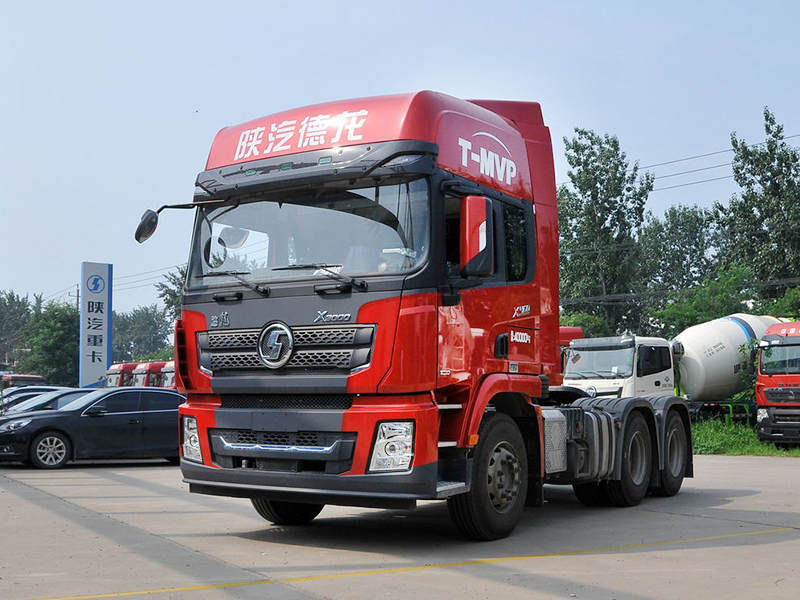
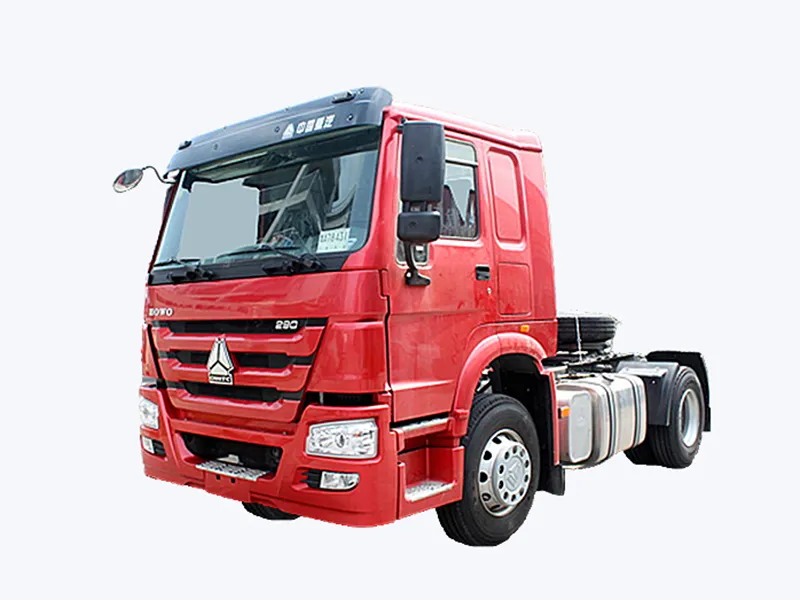
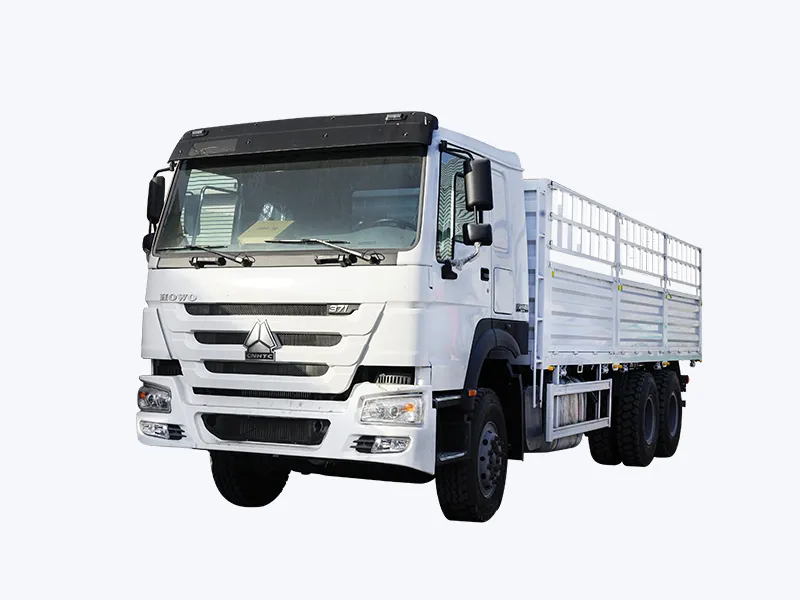
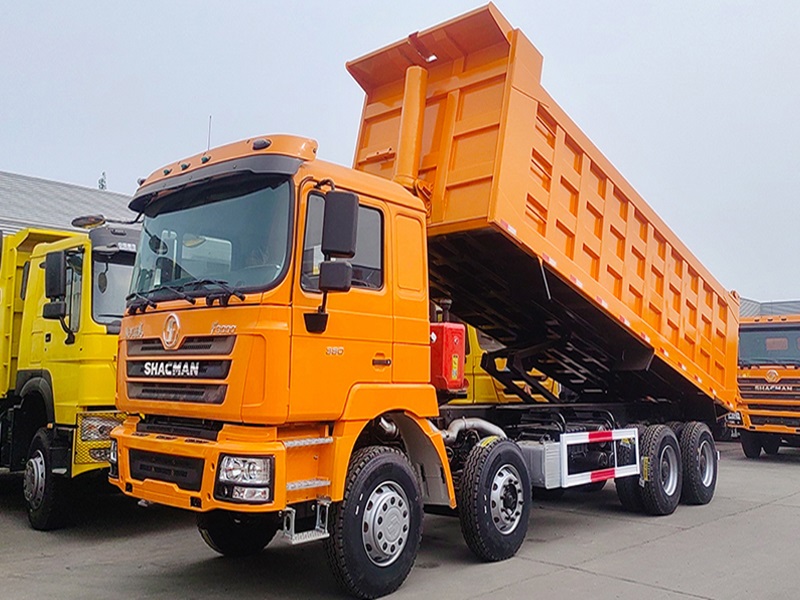
Select a 4x2 tractor when legal axle loads, paved routes, moderate combination weight, turning space, lower curb weight, and simpler maintenance favor a two-axle tractor. Select a 6x4 when the route, trailer load, gradients, poor surfaces, traction demand, and operating policy justify two driven rear axles. Then compare HOWO, SHACMAN, and HOHAN by exact engine, transmission, axle ratio, emissions configuration, condition evidence, local parts support, and total cost per productive kilometer. The lowest equipment price is not automatically the lowest fleet cost.
Fleet buyers often begin with a brand or horsepower request, but the more important question is whether the complete tractor-trailer combination fits the job. A tractor head that performs well on flat highways with a standard semitrailer may be inefficient or unreliable on steep, unpaved routes. A powerful 6x4 can add traction and durability for demanding work, yet it can also add weight, tires, driveline components, and fuel cost when the route does not require them.
This guide helps transport companies, construction fleets, logistics contractors, distributors, and importers evaluate a used tractor truck through a procurement-committee method. Instead of treating 4x2 versus 6x4 and HOWO versus SHACMAN versus HOHAN as isolated questions, it connects configuration, inspection, service support, route economics, shipment, and remaining risk to total cost of ownership.
A tractor-truck duty profile is a measurable description of the trailer, cargo, route, legal limits, operating schedule, climate, driver practice, service capability, and financial objective that determines the required truck configuration.
A useful duty profile begins with the trailer. State whether the tractor will pull a flatbed, lowbed, tanker, tipper semitrailer, curtain-side, container chassis, refrigerated trailer, or another design. Record trailer tare weight, maximum legal combination weight, kingpin load, axle layout, fifth-wheel height, electrical and pneumatic connections, and any hydraulic requirement. A tractor cannot be selected correctly without understanding the trailer interface.
Next, document the route. Record the percentage of paved and unpaved travel, maximum sustained gradient, typical speed, one-way distance, congestion, turning restrictions, altitude, ambient temperature, dust, rain, and border or weigh-station conditions. Include the number of starts, stops, climbs, and loading cycles. A long highway route and a short mine-to-plant route can have similar gross weight but very different thermal, traction, braking, and maintenance demands.
Define the operating schedule: kilometers per day, hours per shift, shifts per day, idling time, annual working days, and whether the truck is revenue-critical. A tractor used occasionally can tolerate a different cost and availability balance from one that must complete a scheduled line-haul route every night. Also state whether the fleet has a spare tractor, mobile service, trained technicians, diagnostic equipment, and parts inventory.
Finally, verify destination-country requirements. Confirm left-hand or right-hand drive, registration documents, axle and gross-combination limits, dimensions, emissions, lighting, underrun and safety equipment, speed limiters, tachographs or tracking systems, and modification rules. Do not assume that a configuration commonly exported to one market can be registered in another.
A 4x2 tractor generally has two axles with one driven rear axle, while a 6x4 generally has three axles with two driven rear axles; the best choice depends on traction, legal load distribution, curb weight, route, trailer, and lifecycle economics.
A 4x2 is often preferred for highway transport where roads are paved, gradients are moderate, and local law permits the required combination weight. It usually has fewer tires and driveline components, lower tare mass, and a shorter wheelbase than a comparable 6x4. Those characteristics can support payload efficiency, maneuverability, and lower maintenance. However, a single driven axle may provide less traction on mud, loose gravel, steep sites, or uneven loading areas.
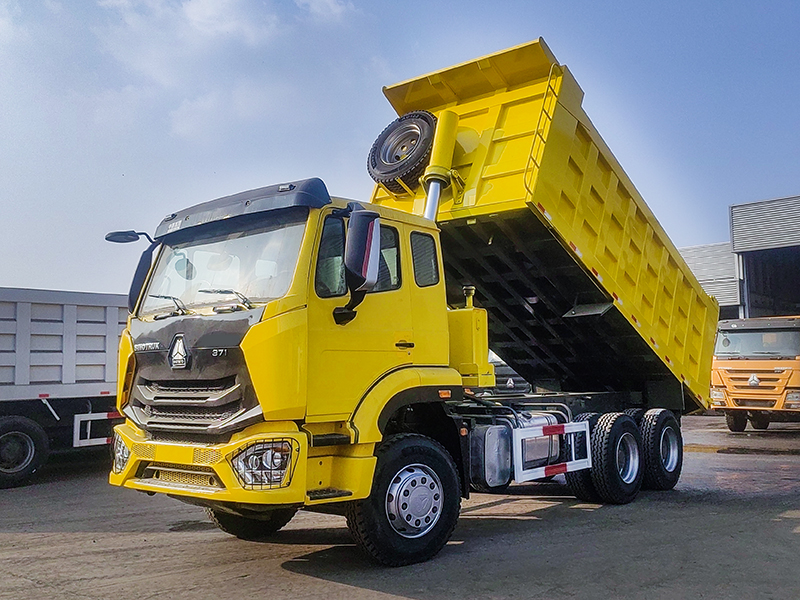
A 6x4 uses tandem driven rear axles. It can provide stronger traction and distribute fifth-wheel load across more rear axle capacity, depending on the exact chassis and local rules. It is common in heavy construction transport, lowbed work, bulk haulage, and routes that include poor surfaces or steep grades. The additional axle, differential, driveshaft, brakes, suspension, and tires add weight and maintenance points. If the route is primarily smooth highway and the legal combination weight does not require the extra axle, that complexity may not create enough value.
| Decision Dimension | 4x2 Tractor Truck | 6x4 Tractor Truck | Procurement Question |
|---|---|---|---|
| Driven axles | One rear driven axle | Two rear driven axles | How much traction is required at loading sites, grades, and wet sections? |
| Tare and payload efficiency | Generally lighter, potentially leaving more legal payload | Generally heavier due to additional axle and driveline | What is the legal combination and axle-load limit? |
| Highway suitability | Often efficient for paved line-haul and regional transport | Suitable but may add unnecessary complexity on easy routes | What percentage of annual kilometers is on paved highway? |
| Off-road and site access | More sensitive to low-traction conditions | Usually stronger traction and load support | Will the tractor enter mines, quarries, construction sites, or unpaved depots? |
| Tires and brakes | Fewer wheel ends and brake assemblies | More tires, brakes, hubs, and suspension components | What are local tire prices and maintenance labor rates? |
| Maneuverability | Often shorter and easier in tight yards | Longer wheelbase may need more space | What is the minimum turning and docking space? |
| Resilience | Simple layout but one driven axle carries all traction duty | Two driven axles can share demanding traction loads | What happens if one wheel end or differential needs service? |
| Shipping | Often shorter and lighter | Longer and heavier, potentially affecting stowage | Have measured shipping dimensions and weight been confirmed? |
The table describes common tendencies, not a universal rule. Exact wheelbase, fuel tanks, suspension, fifth-wheel position, axle ratings, tires, and options can change the comparison. The purchase specification should include measured vehicle dimensions, plate ratings, and the intended trailer rather than relying only on the 4x2 or 6x4 label.
Trailer compatibility is the technical and legal match between the tractor’s fifth wheel, chassis, brakes, connections, axle loads, hydraulic or electrical systems, and the trailer’s operating geometry.
For a standard container chassis or dry-van semitrailer on paved routes, a 4x2 may be an efficient solution where permitted. For a heavy lowbed carrying machinery, a 6x4 may offer better traction and rear-axle support, but the final decision still requires gross-combination, gradeability, cooling, fifth-wheel load, braking, and route analysis. A tipper semitrailer adds hydraulic requirements and can create high stability and traction demands at unloading sites.
Check fifth-wheel height and position. An incorrect height changes trailer angle, landing-leg clearance, axle loading, and handling. Confirm kingpin size, coupling plate condition, fifth-wheel jaw wear, release mechanism, mounting bolts, slider function where fitted, and lubrication. The coupling must be inspected as a safety-critical system, not simply painted.
Pneumatic and electrical connections must match the trailer. Verify service and emergency air lines, connectors, voltage, lighting circuits, ABS or EBS compatibility, hydraulic wet kit where required, and auxiliary power. A tractor can be mechanically sound but require expensive conversion if the connections do not match the fleet’s trailers.
Ask the supplier to photograph or test the offered tractor with a representative trailer where possible. Record coupling height, turning clearance, air pressure build-up, brake response, lighting, and any hydraulic functions. For specialized trailers, have the trailer manufacturer or qualified engineer confirm compatibility.

Verification of a used HOWO tractor truck means confirming the exact model, engine, transmission, axles, electronics, condition, refurbishment, documentation, and compatibility with the buyer’s route and trailer.
HOWO is widely represented in used Chinese heavy-truck export markets, and buyers may already have drivers, technicians, parts, and diagnostic familiarity with the brand. That familiarity can reduce training and inventory complexity. It should not replace unit-specific inspection. A HOWO truck can differ substantially by generation, engine family, horsepower, transmission, axle ratio, cab, fuel capacity, emissions configuration, and previous duty.
Confirm the engine and transmission identification rather than relying on a model badge. Request cold-start video, fault scan, oil and coolant condition, blow-by observations, loaded road test, clutch behavior, gear selection, cooling performance, and post-test leak inspection. Check differential locks, suspension, fifth wheel, brake system, tires, electrical system, cabin safety, and chassis alignment.
For highway work, ask about axle ratio and tire size because they affect engine speed at cruise. For heavy low-speed work, confirm gradeability, cooling, clutch or transmission condition, and driveline capacity. If the truck has emissions aftertreatment, determine whether the system is complete, functional, legally acceptable, and serviceable in the destination. Do not request removal or bypass where that would violate law or create registration problems.
Comparing SHACMAN trucks means evaluating an offered SHACMAN tractor against the same route, trailer, inspection, parts, and cost criteria used for every competing unit.
SHACMAN offers multiple tractor families and configurations, and the used export market can include different engine and transmission combinations. Buyers considering SHACMAN trucks should identify the exact chassis rather than assuming all units share the same components. Confirm model year, cab series, engine, transmission, axles, suspension, fifth wheel, fuel tanks, emissions, and documentation.
Evaluate local support. Are compatible filters, belts, brake parts, clutch components, sensors, injectors, turbochargers, transmission parts, axle parts, and diagnostic tools available? What is the normal lead time? Can technicians interpret fault codes and complete calibration? Parts availability should be judged for the exact component family, not the brand name alone.
Condition evidence should use the same template as HOWO and HOHAN. A fleet comparison becomes biased if one truck receives a complete road test while another is assessed from photos. Ask Snail Truck to present two or three candidate units using the same data fields, video sequence, fault report, tire measurement, refurbishment list, and delivery terms.
A brand TCO comparison estimates how each exact truck option will affect acquisition, operation, maintenance, downtime, parts inventory, driver acceptance, and resale value over the planned ownership period.
There is no defensible universal ranking that makes one brand best for every market. The more useful decision is which offered truck creates the lowest risk-adjusted cost in the buyer’s fleet. A brand already present in the fleet may deliver value through common filters, brake components, diagnostic tools, training, and supplier relationships. A different brand may still be better if its condition, configuration, price, and support package are stronger.
| Evaluation Area | HOWO | SHACMAN | HOHAN | Recommended Evidence |
|---|---|---|---|---|
| Fleet commonality | Check overlap with existing HOWO engines, gearboxes, axles, and cab parts | Check overlap with existing SHACMAN component families | Check local experience with the offered HOHAN configuration | Fleet inventory and maintenance records |
| Current stock | Compare exact year, condition, specification, and preparation | Compare exact year, condition, specification, and preparation | Compare exact year, condition, specification, and preparation | Unit-specific data sheet, VIN photos, inspection package |
| Route fit | Confirm horsepower, axle ratio, cooling, tank capacity, and 4x2/6x4 | Confirm horsepower, axle ratio, cooling, tank capacity, and 4x2/6x4 | Confirm horsepower, axle ratio, cooling, tank capacity, and 4x2/6x4 | Route duty profile and performance test |
| Parts and service | Price and lead time for critical parts | Price and lead time for critical parts | Price and lead time for critical parts | Local supplier quotations and technician survey |
| Condition risk | Faults, wear, tires, brakes, clutch, leaks, chassis | Faults, wear, tires, brakes, clutch, leaks, chassis | Faults, wear, tires, brakes, clutch, leaks, chassis | Common inspection checklist and grading |
| Commercial support | Warranty, parts package, manuals, training, remote support | Warranty, parts package, manuals, training, remote support | Warranty, parts package, manuals, training, remote support | Written offer with exclusions and response process |
| Residual value | Estimate demand for exact configuration in local market | Estimate demand for exact configuration in local market | Estimate demand for exact configuration in local market | Local resale history, not supplier claims alone |
Use a weighted score only after minimum safety and legal requirements are met. For example, configuration fit might carry 25 percent, verified condition 25 percent, local support 15 percent, lifecycle cost 20 percent, commercial terms 10 percent, and documentation 5 percent. The weights should reflect the fleet’s real risks. A company operating far from service centers may assign more weight to parts and technician support.
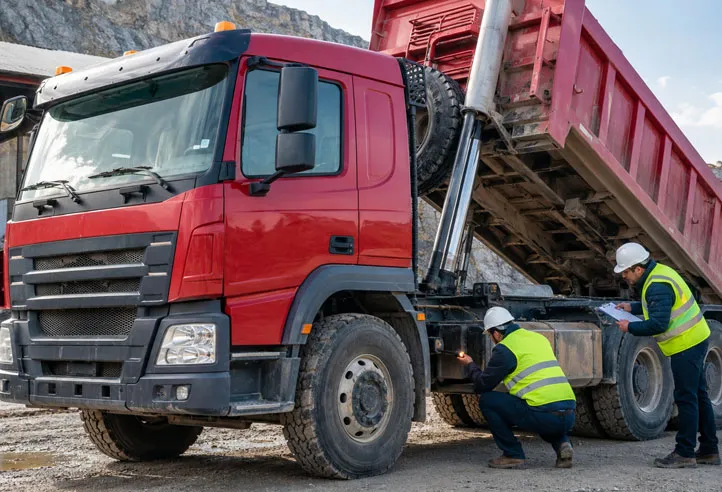
A tractor-truck inspection is a structured examination and test of identity, engine, cooling, transmission, driveline, axles, steering, brakes, suspension, frame, fifth wheel, tires, electrical systems, cab, diagnostics, and road performance.
Begin with identity and documents. Match chassis and engine numbers, model plates, registration or export records, and offered specifications. Photograph the truck from all sides and document any replaced cab, engine, transmission, or axle. If mileage or engine-hour information is used in the commercial decision, ask how it was verified and record uncertainty.
Request a cold start, not only a warm demonstration. Observe cranking, smoke, oil pressure, warning lights, noise, and idle stability. Check fluids and leaks before and after the road test. Inspect radiator, intercooler, hoses, belts, fan, air intake, turbo piping, fuel system, and exhaust or aftertreatment. Monitor temperature under a representative load where possible.
Test clutch, transmission, high and low ranges, retarder or engine brake where fitted, differential locks, steering, service brakes, parking brake, suspension, driveline vibration, and wheel-end temperatures. The road test should include acceleration, steady cruise, braking, turns, gradients, and post-test inspection. Record route, duration, load, and ambient conditions.
Inspect the fifth wheel carefully. Check jaw wear, locking, plate cracks, mount movement, lubrication, release handle, slider mechanism, and chassis mounting. Verify air and electrical connectors, fuel tanks, batteries, lights, mirrors, seat belts, wipers, instruments, and emergency equipment. A diagnostic scan should identify active and stored faults and determine whether codes return after testing.
As a general external benchmark, U.S. commercial-vehicle inspection rules include brakes, steering, lighting, tires, wheels and rims, coupling devices, and emergency equipment among minimum areas. Buyers should follow destination-country law, but these categories show why a tractor inspection must cover both powertrain and safety systems.
A refurbishment specification states the defects to correct, parts and workmanship standards, tests, cosmetic scope, acceptance criteria, documentation, and exclusions for each used tractor truck.
A vague instruction such as “make the truck like new” is difficult to verify and can create disputes. Separate mechanical, safety, functional, cosmetic, documentation, and shipping work. Mechanical items may include leaks, cooling, clutch, transmission, driveline, steering, brakes, suspension, tires, batteries, and diagnostic faults. Functional work may include lighting, instruments, HVAC, locks, fifth-wheel operation, air connections, and accessories. Cosmetic work can include cab repair, interior cleaning, corrosion treatment, and paint.
Define tire condition numerically where possible: size, acceptable casing, tread depth, matching requirements, and whether new, retreaded, or used tires are allowed. Define battery voltage and test method, fluid and filter changes, brake measurements, road-test conditions, and diagnostic acceptance. If major components are opened or replaced, request photographs and part records.
Snail Truck describes a 10-step refurbishment and inspection process on its used-truck pages. For a purchase order, convert that general process into unit-specific deliverables. Each truck should have an initial defect list, agreed work, completion evidence, final inspection, road-test record, and approved deviation list. Paint should be the final presentation layer, not the primary definition of quality.
Total cost of ownership is the cost of acquiring, preparing, importing, operating, maintaining, financing, and replacing a tractor truck, minus its residual value, over a defined period or distance.
Choose a common unit such as cost per productive kilometer, cost per loaded trip, or cost per ton-kilometer. Productive distance excludes kilometers lost to avoidable downtime, detours caused by breakdown, or empty movement where the business model distinguishes them. The calculation should use the same route, trailer, cargo, annual distance, fuel price, labor, and ownership period for every truck option.
A practical TCO model includes:
Equipment purchase and refurbishment.
Inspection, inland transport, shipping, insurance, import, registration, and modifications.
Financing, currency exposure, and payment cost.
Fuel and urea or other consumables where applicable.
Engine oil, transmission and axle oil, coolant, filters, and grease.
Tires, brakes, clutch, suspension, wheel-end, and electrical maintenance.
Scheduled labor and unscheduled repair labor.
Critical spare-parts inventory and diagnostic tools.
Driver training and differences in driver acceptance.
Downtime, replacement vehicle, late-delivery penalties, and lost revenue.
Insurance and statutory inspections.
Residual value and disposal cost.
Fuel consumption should not be estimated from horsepower alone. Gross combination weight, speed, gradient, wind, traffic, tire pressure, axle ratio, engine condition, aerodynamics, idling, and driver behavior all matter. Run a controlled route test or pilot where the purchase quantity justifies it. For used vehicles, condition variability can be more important than the brand average.
Model expected, favorable, and adverse cases. The adverse case might include lower annual availability, a clutch or turbocharger replacement, higher tire use, parts delays, or a shipping schedule change. A 4x2 may show lower fuel and tire cost on a highway route, while a 6x4 may show lower delay and recovery cost on a poor road. The correct answer emerges from the route model, not a general slogan.
A decision matrix converts technical, operational, commercial, and risk requirements into weighted scores so that a fleet can compare tractor options transparently.
Before scoring, set mandatory gates. Examples include legal registration, correct drive side, verified identity, acceptable braking, no unresolved structural crack, compatible fifth wheel, emissions compliance, and an approved inspection. A truck that fails a mandatory gate should not win because of price.
| Criterion | Suggested Weight | Evidence | Scoring Question |
|---|---|---|---|
| Route and trailer fit | 25% | Duty profile, axle and performance data, compatibility test | Will the tractor complete the real route legally and reliably? |
| Verified condition | 25% | Inspection, scan, cold start, road test, defect grading | How much immediate and uncertain repair risk remains? |
| TCO | 20% | Five-year or distance-based cost model | What is the risk-adjusted cost per productive kilometer? |
| Parts and service | 15% | Local quotations, lead times, technician capability | Can the fleet restore service quickly after common failures? |
| Commercial terms | 10% | Price, warranty, payment, delivery, rework terms | Are responsibilities and remedies clear? |
| Documentation and supplier evidence | 5% | Company, vehicle, export, and shipment records | Can the transaction and exact unit be verified? |
Review scoring with operations, maintenance, finance, compliance, and drivers. Procurement may prioritize purchase price, while maintenance sees parts risk and operations sees route delays. A shared matrix makes the tradeoffs visible. Keep the raw evidence beside the score so that a high number cannot hide weak documentation.
Shipping planning determines how the tractor will be measured, prepared, secured, documented, transported, discharged, inspected, and placed into service at destination.
Tractor trucks may move by RoRo where service is available, by container or special equipment when dimensions and preparation permit, or by bulk and breakbulk arrangements. The correct method depends on unit dimensions, weight, port capability, vessel schedule, destination restrictions, vehicle condition, and cost. Do not select a method from a general rate without measuring each final unit.
Before shipment, confirm overall length, width, height, weight, ground clearance, fuel level, battery isolation, loose accessories, keys, spare parts, and whether mirrors, exhaust parts, fairings, wheels, or other components will be removed. Record how removed parts are labelled, protected, packed, and reinstalled. Check that the truck can safely drive for loading and discharge or define towing and lifting procedures.
Prepare arrival support before the vessel departs. The receiving team should have documents, customs broker, transport permit, recovery plan, correct batteries or fuel, tire-inflation equipment, basic parts, tools, and technicians. Complete a destination inspection before commercial operation. Shipping and storage can create battery discharge, low tire pressure, corrosion, loose connections, or minor damage even when the truck left the supplier in acceptable condition.
Supplier value is the combination of current stock access, application matching, inspection evidence, refurbishment control, export preparation, communication, and after-sales support provided for a specific project.
Snail Truck states that it was founded in 2016, operates from a large used-truck trading base in Shandong, has supplied more than 89 countries, and has annual export capacity of approximately 10,000 trucks. The company’s website also describes a 10-step refurbishment process and a broad inventory covering HOWO, SHACMAN, HOHAN, dump trucks, tractor trucks, mixer trucks, and water tanker trucks.
Scale can help with model choice and batch supply, but a buyer should still request unit-specific evidence. The best use of a supplier’s inventory is to compare several available trucks under one duty profile. Send Snail Truck the route, trailer, cargo, quantity, preferred brands, legal requirements, destination port, timing, and inspection standard. Ask for a comparison table showing exact configuration, condition, refurbishment scope, price, shipping plan, and open risks.
For a larger fleet order, consider a pilot batch. Inspect and operate a small number under real conditions, record fuel, temperature, faults, driver feedback, tire wear, maintenance, and availability, then refine the specification for the next batch. That creates a learning loop and reduces the risk of repeating an unsuitable configuration across many units.
These frequently asked questions summarize the most common configuration, brand, inspection, cost, and import decisions for used tractor-truck buyers.
A 4x2 is often efficient on paved highways because it is generally lighter and has fewer tires and driveline components. A 6x4 may be justified when legal load distribution, steep gradients, poor surfaces, heavy trailers, or loading-site traction require two driven rear axles. Check destination law, trailer kingpin load, route, annual kilometers, tire and fuel cost, and downtime risk before deciding.
Compare the exact unit, not only the brand. Use the same fields for engine, transmission, axle ratio, emissions, year, condition, diagnostics, road test, tires, brakes, fifth wheel, refurbishment, parts availability, warranty, and delivered cost. Give extra weight to component commonality and local technician capability. One brand may be best for one fleet and not for another.
No single inspection is sufficient. Identity, cold start, engine and cooling, transmission, driveline, steering, brakes, suspension, frame, fifth wheel, tires, electrical systems, diagnostics, and road performance must be considered together. The fifth wheel and braking system are especially safety-critical, while cooling and driveline condition strongly affect route reliability.
No. Route speed may be limited by law, traffic, gradient, trailer, gearing, braking, cooling, tire condition, and loading or border delays. Higher horsepower can help under some loads and grades, but it may not create useful productivity if axle ratio, transmission, traction, or route constraints are wrong. Evaluate power within the complete vehicle and route model.
Calculate acquisition, refurbishment, inspection, shipping, import, financing, fuel, tires, fluids, maintenance, repairs, parts inventory, driver cost, downtime, insurance, statutory inspection, and residual value over the same distance and period. Divide by productive kilometers or ton-kilometers. Model expected and adverse cases, because condition and parts delays can change used-truck economics materially.
Provide trailer type and weight, cargo, gross combination target, route distance, road surface, maximum gradient, annual kilometers, operating hours, preferred 4x2 or 6x4, horsepower range, emission requirement, LHD or RHD, brand preference, quantity, destination country and port, budget, shipment date, spare-parts need, and inspection method. This enables a current-stock comparison tied to your fleet duty.
The right used tractor truck is the unit that legally and reliably pulls the intended trailer over the real route at the lowest risk-adjusted cost per productive kilometer.
Start with the duty profile, not the badge. Compare 4x2 and 6x4 by traction, legal load, road condition, maneuverability, tires, maintenance, and shipping. Compare HOWO, SHACMAN, and HOHAN by exact configuration, verified condition, local support, and TCO. Use mandatory safety and legal gates before weighted scoring, and require the same inspection evidence for every candidate.
Snail Truck can help buyers shortlist current tractors, document refurbishment, coordinate inspection, and plan export delivery. A productive inquiry should include the trailer, cargo, route, configuration, quantity, destination, and acceptance standard. Request two or three unit-specific options and make the commercial decision from a shared comparison matrix. This approach replaces a broad brand debate with a fleet decision that operations, maintenance, finance, and procurement can defend.
These external references provide general vehicle-inspection, tractor-unit, and ownership-cost background; buyers must also consult current destination-country law and project specialists.
1. U.S. Federal Motor Carrier Safety Administration, Equipment Inspection and Use: https://csa.fmcsa.dot.gov/safetyplanner/MyFiles/SubSections.aspx?ch=23&sec=68&sub=166
2. Wikipedia, Tractor Unit: https://en.wikipedia.org/wiki/Tractor_unit
3. Wikipedia, Total Cost of Ownership: https://en.wikipedia.org/wiki/Total_cost_of_ownership
 English