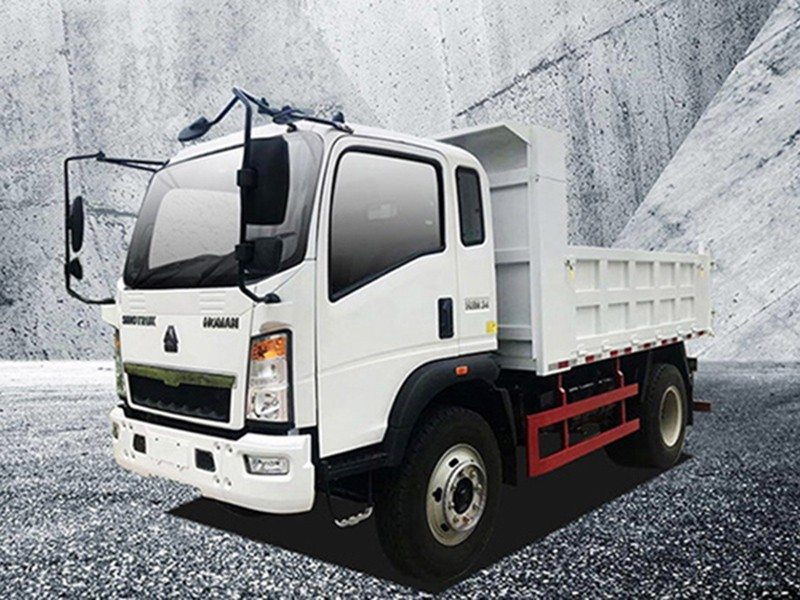
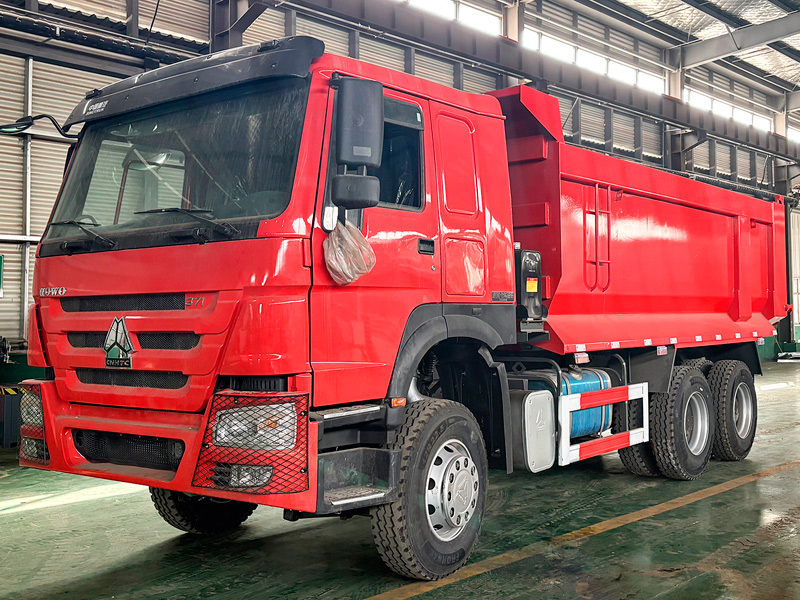
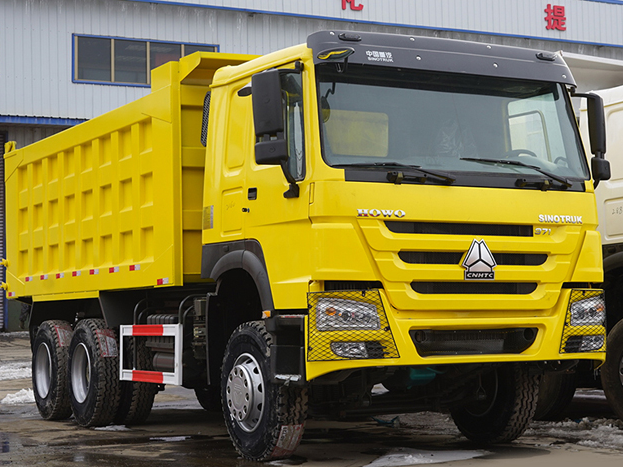
In 2026, the conversation around mining fleet procurement has fundamentally shifted. Purchase price still matters, but it is no longer the primary decision criterion for experienced mining contractors and bulk-haulage operators. The metric that now drives fleet sourcing decisions is cost per ton transported — a figure that accounts for fuel consumption, maintenance frequency, downtime hours, driver productivity, and asset payback speed all at once.
This shift in thinking has significant implications for which trucks end up on mine sites across Africa, Southeast Asia, the Middle East, and other heavy-construction regions. A truck that costs less to buy but breaks down frequently, consumes excessive fuel on loaded climbs, or requires hard-to-source spare parts will generate a higher cost per ton than a more expensive unit that runs reliably through long shifts. Conversely, a well-specified used truck sourced at significantly below new-unit pricing — and maintained correctly — can deliver the lowest cost per ton of any option in the fleet.
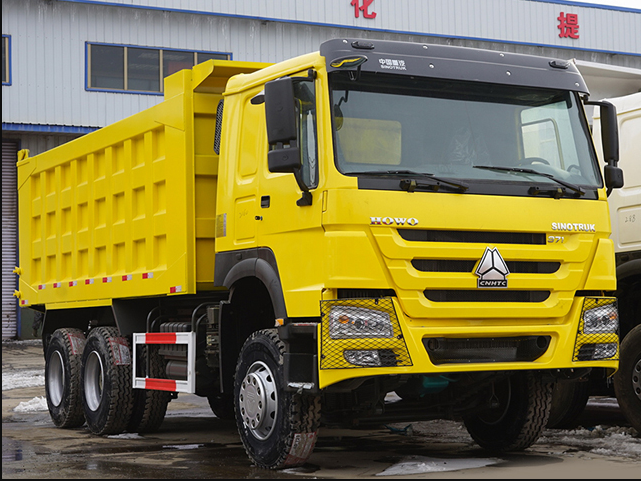
This is precisely where the shacman x3000 dump truck has established its reputation. The X3000's 8x4 drivetrain, rugged chassis architecture, reinforced dump body, and proven powertrain combination make it one of the most capable heavy-duty tipper trucks available for demanding mining environments. For buyers evaluating a used Shacman X3000 8x4, the value proposition goes beyond the purchase price discount — it extends to Shacman X3000 mining performance across thousands of operating hours in conditions that would expose weaknesses in less robust designs.
This guide covers the complete picture: why the X3000 fits 2026 mining cost priorities, how its powertrain delivers reliable heavy-load performance, what components to evaluate before purchase, how used units compare to new trucks on CAPEX and ROI, and what sourcing and maintenance practices protect the investment over the long term. Keywords relevant to this decision — used Shacman X3000 8x4, heavy-duty tipper truck, Shacman X3000 mining performance, and wholesale 8x4 dump trucks — are addressed throughout.
Understanding why the shacman x3000 dump truck has become a dominant choice for heavy-duty mining in 2026 requires understanding the operating environment that mining contractors are actually working in — not the ideal conditions described in product brochures, but the real conditions of open-pit mines, quarry haul roads, and large-scale earthmoving sites.
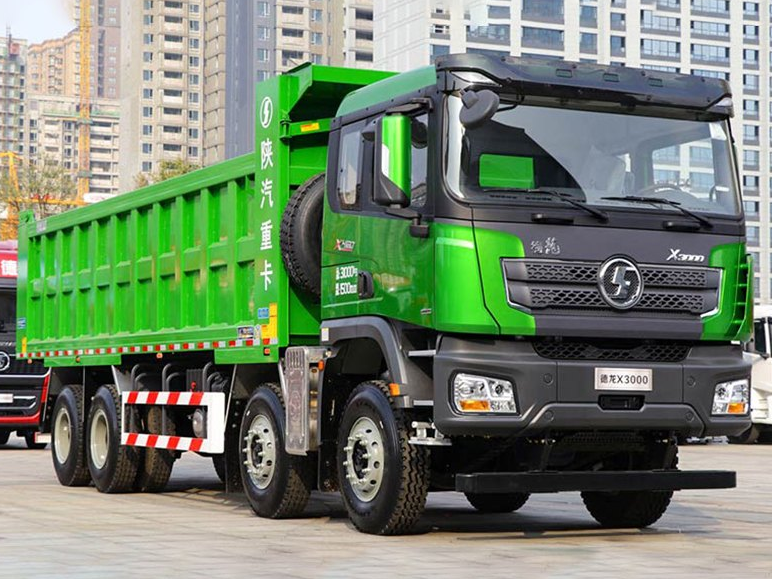
A shacman x3000 dump truck is a heavy-duty tipper truck built specifically for high-volume, high-stress applications: open-pit mining, quarry operations, aggregate and ore transport, large infrastructure earthwork, and cement raw material hauling. Its defining characteristics are the 8x4 drivetrain configuration, heavy-duty reinforced chassis, large-capacity dump body, and a powertrain designed for continuous operation under maximum load conditions. These are not features that matter in light-duty applications — they are features that determine whether a truck survives and performs in mining environments where lesser equipment fails.
In 2026, the buyers who are most actively sourcing used Shacman X3000 8x4 units share a common set of priorities:
Lower initial investment without sacrificing output capability — Mining projects operate on project financing that has become more expensive and more scrutinized. Every dollar saved on equipment acquisition is a dollar available for fuel, labor, tires, and spare parts — the operational costs that directly determine daily output.
Faster payback period — A truck that costs 40% less than a new unit reaches its break-even point significantly faster, even if its daily output is comparable. For project-based contractors working on fixed-term mining contracts, this acceleration of the payback cycle is a direct financial advantage.
Lower downtime risk — The X3000's powertrain and chassis components are well-supported by parts networks in Africa, Southeast Asia, and the Middle East. When a component requires replacement, the parts are available locally rather than requiring weeks of international shipping.
Better cost-per-ton performance — When initial investment, fuel efficiency, maintenance cost, and daily hauling output are combined into a single metric, a well-sourced used shacman x3000 dump truck consistently delivers competitive cost-per-ton figures against both new Chinese trucks and competing international brands.
The target markets for this product in 2026 span a wide geography: West and East African mining operations, Southeast Asian infrastructure and quarry projects, Middle Eastern construction and aggregate supply chains, and South Asian bulk material transport. In each of these markets, the combination of heavy-duty tipper truck capability and controlled acquisition cost makes the X3000 a practical first choice rather than a compromise option.
The term "golden power chain" refers to the specific combination of engine and transmission that defines the X3000's performance character — and understanding why this combination matters is essential for any buyer evaluating Shacman X3000 mining performance against competing options.
The used SHACMAN X3000 8x4 dump truck is equipped with a Weichai WP10.380E3 engine producing 371 horsepower, paired with a FAST 12JSD180T-B transmission. This combination is not accidental — it represents a deliberate engineering choice that prioritizes torque delivery, shifting stability under load, and long-term reliability in continuous heavy-duty operation.
The Weichai Engine Advantage
The Weichai WP10 engine family is one of the most widely deployed heavy-duty diesel engines in Chinese commercial vehicles, and its reputation in mining applications is built on a specific set of performance characteristics. The engine produces strong low-end torque — the kind of pulling power that matters when a fully loaded shacman x3000 dump truck is climbing a steep mine haul road with 30 to 40 tons of ore or aggregate in the dump body. High-RPM horsepower figures look impressive in specifications, but it is low-RPM torque that determines whether a truck can maintain momentum on a 12% grade without downshifting repeatedly or overheating the drivetrain.
The WP10 also benefits from an established service network. Weichai engines are among the most commonly serviced heavy-duty diesel units in Africa and Southeast Asia, which means that qualified mechanics, diagnostic equipment, and replacement parts are available in most markets where the X3000 operates. This parts availability directly reduces downtime risk — one of the most significant contributors to high cost-per-ton figures in mining operations.
The Fast Transmission Advantage
The FAST 12JSD180T-B is a 12-speed transmission designed specifically for heavy-load applications. Its primary advantage in mining use is shifting stability under load — the ability to execute gear changes smoothly when the truck is carrying maximum payload on variable terrain. In mining environments, trucks frequently encounter transitions between flat haul roads, steep loading ramps, and uneven pit floors. A transmission that shifts cleanly under these conditions reduces driver fatigue, protects the drivetrain from shock loading, and maintains consistent speed and fuel efficiency across the full operating cycle.
The combination of the Weichai engine's torque characteristics and the Fast transmission's load-handling capability creates a powertrain that is genuinely suited to the demands of heavy-duty mining — not just capable of handling those demands occasionally, but designed to sustain them across long shifts and high annual mileage.
Why Powertrain Reliability Directly Affects Cost Per Ton
The connection between powertrain reliability and cost-per-ton performance is direct and quantifiable. Every hour a truck spends in unplanned maintenance is an hour it is not generating revenue. Every breakdown that requires a mechanic to diagnose and repair an unfamiliar engine or transmission adds cost and delay. Every shift where a truck cannot maintain its scheduled trip count because of drivetrain issues reduces the daily output that the fleet's economics depend on.
A shacman x3000 dump truck with a proven Weichai and Fast power chain reduces all of these risks simultaneously — which is why experienced mining fleet managers consistently prioritize powertrain specification over other variables when evaluating heavy-duty tipper truck options.
The truck's 300-liter fuel tank also supports extended operating shifts without refueling stops, which is particularly valuable in remote mining locations where fuel logistics are complex and time-consuming.
The shacman x3000 dump truck's ability to deliver strong cost-per-ton performance in mining applications is not the result of any single component — it is the product of a system of components that work together to maximize payload capacity, minimize cycle time, and sustain performance across demanding operating conditions.
Here is a detailed breakdown of the components that matter most for mining buyers:
8x4 Drivetrain Configuration
The 8x4 drivetrain is the structural foundation of the X3000's mining capability. With four axles and eight wheels — four of which are driven — the configuration provides load distribution across a larger contact area than 6x4 or 6x2 alternatives. This has three direct benefits in mining environments:
First, better traction on loose, wet, or uneven surfaces — the kind of terrain that characterizes active mine floors and quarry haul roads. Second, better load distribution that reduces stress on individual axle components and extends their service life. Third, higher payload capacity — the 8x4 layout supports gross vehicle weights that would exceed the structural limits of lighter configurations, enabling the X3000 to carry 30 to 40 tons per trip in properly configured applications.
For wholesale 8x4 dump trucks buyers building multi-unit mining fleets, this payload advantage compounds across the fleet. Ten trucks carrying 35 tons per trip generate significantly more daily tonnage than ten trucks carrying 25 tons per trip — and the difference in daily output directly affects project completion timelines and contract profitability.
Heavy-Duty Reinforced Chassis
The X3000's chassis is engineered for repeated high-load transport on rough terrain. The frame uses high-strength steel construction with reinforced cross-members at the points of highest stress concentration — the rear axle mounting area, the dump body support brackets, and the hydraulic cylinder attachment points. This reinforcement is not cosmetic. In mining applications, chassis fatigue is a real failure mode that can develop over thousands of operating hours if the frame is not designed for the actual loads it will carry.
Reinforced Steel Dump Body
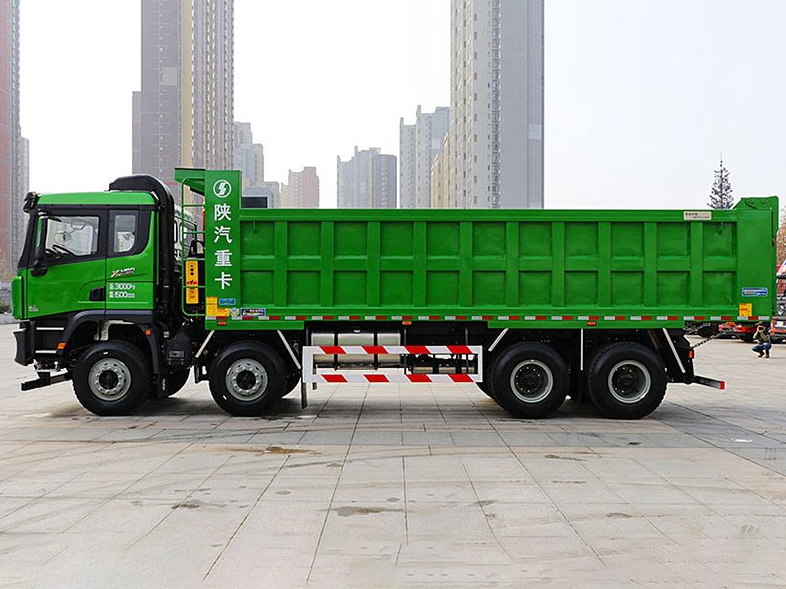
The dump body dimensions on the used SHACMAN X3000 8x4 are listed at 7.6 × 2.5 × 1.7 meters — a configuration that provides substantial volume capacity for bulk materials. The body is constructed from reinforced steel designed to withstand the impact loading that occurs when excavators or loaders drop large rocks, ore chunks, or compacted soil into the box. Thin-walled dump bodies develop cracks and deformation under this kind of repeated impact loading, which eventually compromises structural integrity and requires expensive repair or replacement.
Advanced Hydraulic Tipping System
The hydraulic tipping system determines how quickly the truck can unload and return to the loading point — a cycle time factor that directly affects daily trip count and therefore daily tonnage. A hydraulic system that lifts the dump body smoothly, holds it stable at full extension, and lowers it under controlled pressure reduces unloading time and minimizes the risk of body instability during tipping. The X3000's hydraulic system is designed for the load weights and tipping angles required in mining applications, where the dump body may be carrying maximum payload on a sloped unloading pad.
12R22.5 Tires
The 12R22.5 tire specification is a widely used standard in heavy mining truck applications, which means replacement tires are available in most markets where the X3000 operates. Tire cost is one of the highest recurring expenses in mining fleet operation, and the availability of competitively priced replacement tires in the destination market is a factor that experienced buyers always verify before finalizing a purchase.
The decision between purchasing a new shacman x3000 dump truck and sourcing a high-quality used unit is ultimately a capital allocation decision — and in 2026, the mathematics consistently favor used units for mining contractors who are managing project-based budgets under financial pressure.
| Option | Best Application | Primary Advantage | Key Consideration |
|---|---|---|---|
| New Shacman X3000 dump truck | Long-term premium fleet investment, government contracts requiring new equipment | New condition, full warranty, longer initial service interval | Highest initial CAPEX, steepest depreciation in first three years |
| Used Shacman X3000 8x4 | Mining, quarry, and construction fleets focused on ROI and payback speed | Lower purchase cost by 40% or more, faster break-even, practical mining performance | Requires thorough pre-purchase inspection and reliable supplier verification |
| Mixed fleet strategy | Contractors expanding quickly under budget constraints | Balances cost control with output capacity | Requires consistent maintenance planning across different unit ages |
| Wholesale 8x4 dump trucks | Fleet buyers, equipment dealers, and regional resellers | Better unit-cost control at volume, stronger margin on resale | Requires export logistics support and destination market knowledge |
The CAPEX Reduction Logic
The financial case for sourcing a used shacman x3000 dump truck instead of a new unit is most clearly illustrated at the fleet level. If a new X3000 represents the 100% budget benchmark for a single unit, a high-quality used unit sourced through a verified supplier can reduce that initial investment by 40% or more, depending on the unit's year, condition, mileage, and configuration.
For a 10-truck mining fleet, a 40% reduction in per-unit cost frees capital equivalent to four additional trucks at the used-unit price point. That freed capital can be deployed toward:
Fuel reserves for the first three to six months of operation
On-site spare parts inventory to minimize downtime
Tire replacement budget for the first operating year
Driver wages and training costs
Site infrastructure and logistics support
This capital reallocation effect is why experienced mining contractors increasingly view used unit sourcing not as a compromise but as a deliberate financial strategy. The goal is not to buy the cheapest trucks available — it is to acquire the maximum productive capacity per dollar of capital invested, while maintaining the reliability standards that mining operations require.
Why Lower CAPEX Matters More in 2026
Global economic uncertainty in 2026 has made project financing more expensive and more conditional. Mining contractors who can demonstrate lower equipment acquisition costs in their project budgets have a competitive advantage in contract bidding. They also carry less financial risk if commodity prices shift or project timelines extend — because their fixed asset costs are lower and their break-even point is closer.
A used Shacman X3000 8x4 sourced at 40% below new-unit pricing reaches its break-even point significantly faster than a new unit, even if daily output is comparable. For a project with a 24-month contract term, this difference in payback speed can determine whether the fleet generates profit or merely recovers its costs.
Sourcing a used shacman x3000 dump truck for mining applications involves a higher level of due diligence than purchasing new equipment. The condition of a used truck is not guaranteed by a manufacturer warranty — it is determined by the truck's operating history, maintenance quality, and the thoroughness of the pre-purchase inspection process.
Common Sourcing Challenges That Increase Risk
Purchasing based on price alone without evaluating engine condition, transmission performance, or chassis integrity
Ignoring the hydraulic tipping system until after delivery, when repair costs fall entirely on the buyer
Underestimating tire replacement cost by not checking the wear condition of all axle positions
Choosing a truck configuration that does not match the actual terrain and payload requirements of the project
Failing to verify export documentation, shipping schedule, and destination port clearance requirements before committing to purchase
Not calculating total cost of ownership — unit price plus first-year maintenance, tires, and parts — before comparing options
Working with suppliers who lack experience in international heavy truck export and cannot provide reliable inspection documentation
Pre-Purchase Buying Checklist for Used Shacman X3000 8x4
Confirm the truck's year of manufacture, total mileage, and documented working history
Inspect the Weichai WP10 engine for oil leaks, coolant contamination, and compression condition
Test the Fast 12JSD180T-B transmission through all gear positions under load simulation
Examine the chassis frame for cracks, weld repairs, corrosion, and deformation at high-stress points
Test the hydraulic tipping system through a full lift and lower cycle, checking for cylinder leakage and body stability
Inspect the reinforced dump body for structural damage, floor wear, sidewall deformation, and tailgate seal condition
Check all 12R22.5 tires for tread depth, sidewall condition, and wear pattern consistency
Confirm cargo box dimensions and payload suitability for the project's material type and volume requirements
Request photographs, video evidence of the hydraulic system operating, inspection reports, and maintenance records
Confirm export documentation requirements, available port options, and realistic delivery timeline
Calculate total cost per ton based on purchase price, estimated first-year operating costs, and projected daily trip count
Snail Truck's team can assist buyers in matching specific used SHACMAN X3000 8x4 units to project requirements based on budget, terrain conditions, payload needs, and destination market — providing inspection documentation and export support that reduces sourcing risk.
Maintenance Guide for Mining Operations
Establishing a disciplined maintenance routine from the first operating day is the most effective way to protect the investment in a used shacman x3000 dump truck and sustain its cost-per-ton performance over the full project lifecycle.
Check engine oil, coolant level, and hydraulic fluid before every operating shift without exception
Inspect chassis bolts, suspension components, and rear axle U-bolt torque after the first 500 operating hours and monthly thereafter
Clean the dump body thoroughly after transporting wet soil, ore, or chemically active materials that can accelerate corrosion
Monitor tire pressure daily across all axle positions and inspect sidewalls for impact damage after each shift on rough terrain
Maintain an on-site inventory of high-wear consumables: oil filters, fuel filters, hydraulic seals, brake linings, and belts
Inspect hydraulic cylinders and hose connections for leakage after every 250 operating hours
Train all drivers on correct loading procedures, maximum payload limits, safe downhill driving technique, and the consequences of overloading on chassis and hydraulic system longevity
Schedule comprehensive mechanical inspections at 1,000-hour intervals regardless of apparent operating condition
Document all maintenance activities to build a service history that supports resale value at the end of the project
In 2026, the shacman x3000 dump truck earns its position as the dominant choice for heavy-duty mining not through marketing claims but through a combination of engineering decisions that directly address the metrics mining contractors care about most. The Weichai and Fast golden power chain delivers reliable torque and shifting stability across long operating shifts. The 8x4 drivetrain provides the traction, load distribution, and payload capacity that demanding mine terrain requires. The reinforced chassis and dump body sustain performance through the repeated high-load cycles that expose weaknesses in less robust designs.
And when a high-quality used Shacman X3000 8x4 is sourced at 40% or more below new-unit pricing through a verified supplier like Snail Truck, the cost-per-ton advantage becomes compelling at every level of the financial analysis — lower initial CAPEX, faster payback, better cash flow for operational costs, and the ability to expand fleet capacity under the same procurement budget.
For mining contractors, quarry operators, and bulk-haulage businesses building or expanding their fleets in 2026, the used shacman x3000 dump truck is not a compromise. It is a deliberate, financially sound strategy for maximizing tonnage output while controlling the capital investment that makes projects viable.
Contact Snail Truck today to review available used Shacman X3000 8x4 inventory, request detailed inspection documentation and unit specifications, compare configuration options for your specific project terrain and payload requirements, and receive a fleet quotation that demonstrates the full CAPEX and ROI advantage of sourcing used X3000 units for your mining or construction operation.
Q1: Why is the Shacman X3000 dump truck considered the best choice for heavy-duty mining in 2026?
The shacman x3000 dump truck is designed specifically for the demands of heavy-duty mining: its 8x4 drivetrain provides superior traction and load distribution on rough mine terrain, its Weichai engine delivers strong low-end torque for loaded climbing, its Fast transmission handles gear changes smoothly under maximum payload, and its reinforced chassis and dump body sustain performance through repeated high-load cycles. In 2026, when cost per ton has become the primary fleet performance metric, the X3000's combination of output capability and controlled acquisition cost makes it the most practical choice for mining contractors across Africa, Southeast Asia, and the Middle East.
Q2: What is the advantage of the used Shacman X3000 8x4 over a new truck?
A high-quality used Shacman X3000 8x4 can reduce initial capital expenditure by 40% or more compared with a new unit, depending on the truck's year, condition, and mileage. This CAPEX reduction accelerates the payback period, frees capital for operational costs, and allows contractors to expand fleet size under the same procurement budget. For project-based mining operations where the asset payback cycle must align with the contract term, this financial advantage is often decisive.
Q3: How does the 8x4 drivetrain improve performance in mining environments?
The 8x4 configuration distributes the truck's load across four axles and eight wheels, with four driven wheels providing traction on loose, wet, and uneven mine surfaces. This load distribution reduces stress on individual axle components, improves stability under maximum payload, and enables higher gross vehicle weights than 6x4 or lighter configurations. For heavy mining applications where payload capacity and terrain performance are both critical, the 8x4 drivetrain is the appropriate choice.
Q4: What makes the Weichai and Fast transmission combination reliable for mining?
The Weichai WP10.380E3 engine produces strong low-RPM torque that maintains momentum on steep haul road grades under full load — the operating condition that most frequently causes drivetrain stress in mining applications. The Fast 12JSD180T-B transmission executes gear changes smoothly under heavy load, reducing shock loading on the drivetrain and maintaining consistent speed and fuel efficiency across variable terrain. Both components are widely supported by parts networks in Africa and Southeast Asia, which minimizes downtime risk when maintenance is required.
Q5: What should buyers inspect before purchasing a used Shacman X3000 dump truck?
The most critical inspection points are the Weichai engine condition including oil leaks and compression, the Fast transmission shifting performance through all gear positions, the chassis frame for cracks and deformation at high-stress points, the hydraulic tipping system for cylinder leakage and lifting stability, the reinforced dump body for structural damage and floor wear, all 12R22.5 tires for tread depth and sidewall condition, and the truck's documented maintenance history. Always request video evidence of the hydraulic system operating and written inspection reports before finalizing any purchase.
Q6: Can Snail Truck support wholesale 8x4 dump trucks orders for fleet buyers?
Yes. Snail Truck provides used SHACMAN X3000 8x4 dump trucks for mining, quarrying, and large-scale construction applications, with product specifications, configuration options, and inquiry support available for fleet buyers and equipment dealers. The team can assist with unit matching based on project requirements, inspection documentation, export logistics, and fleet quotations for wholesale 8x4 dump trucks procurement programs.
 English