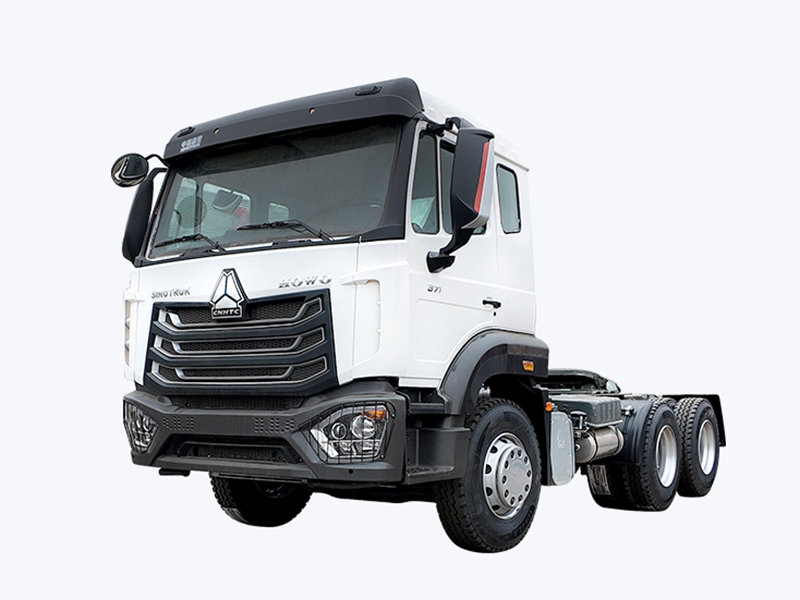
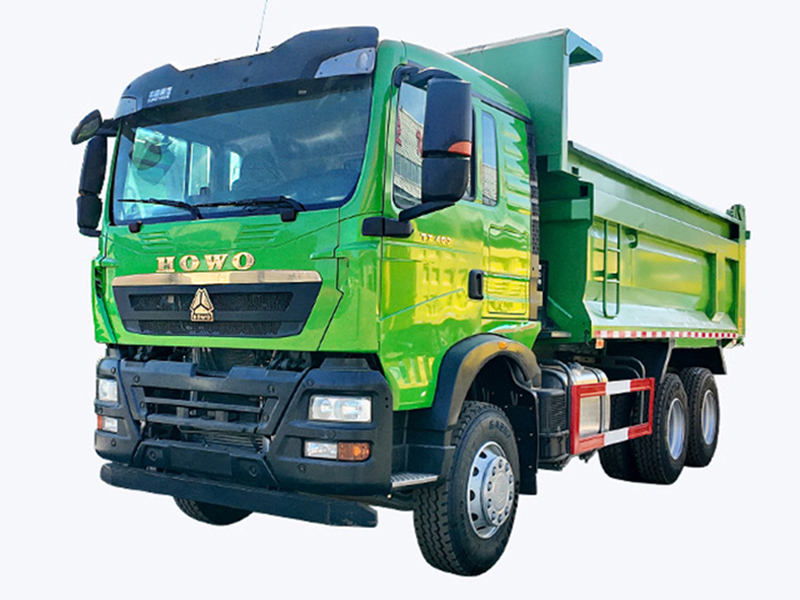
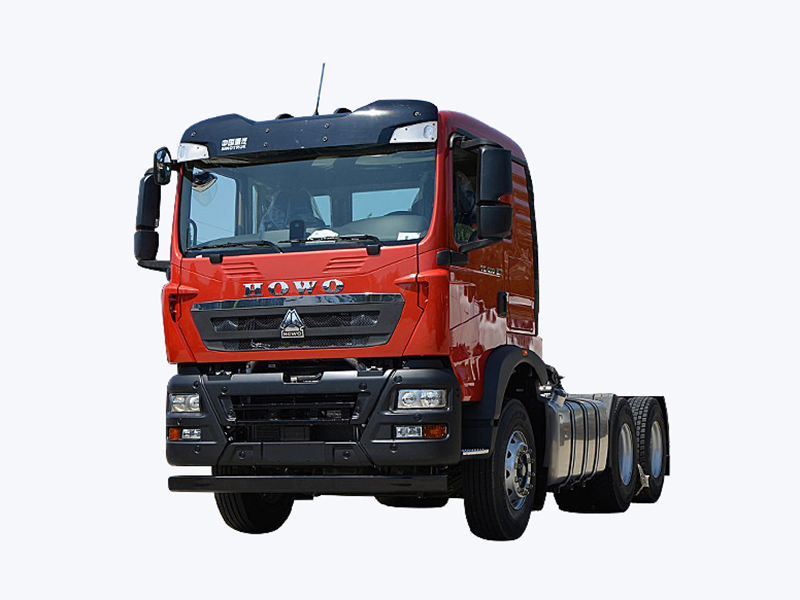
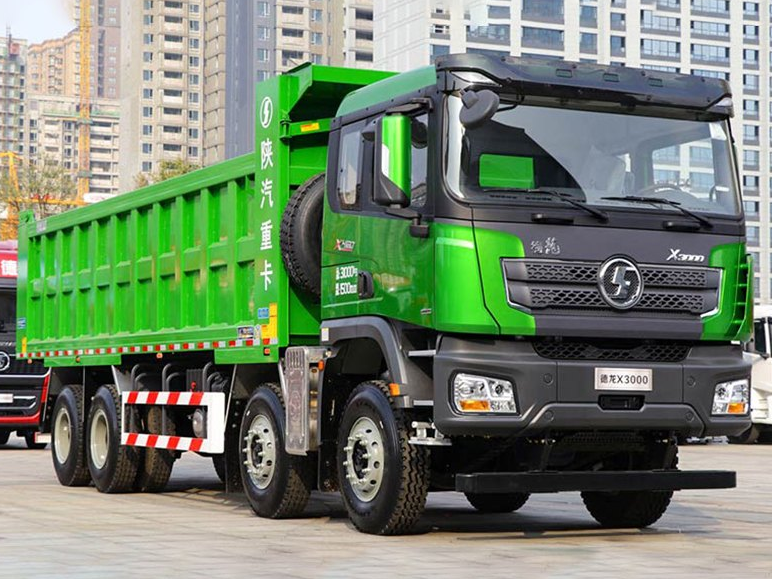
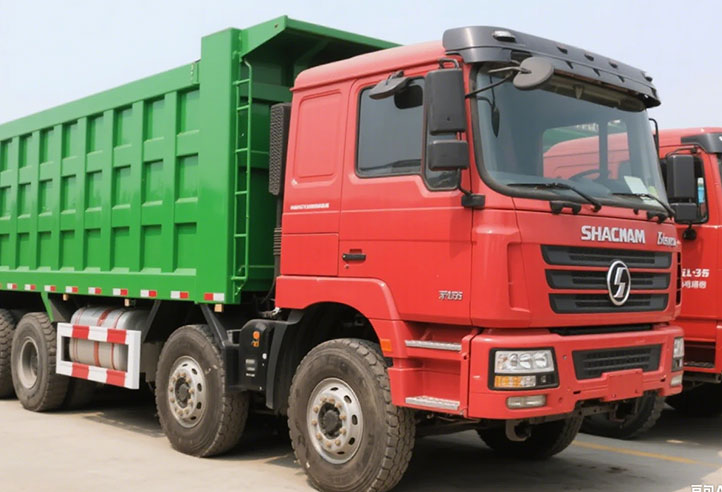
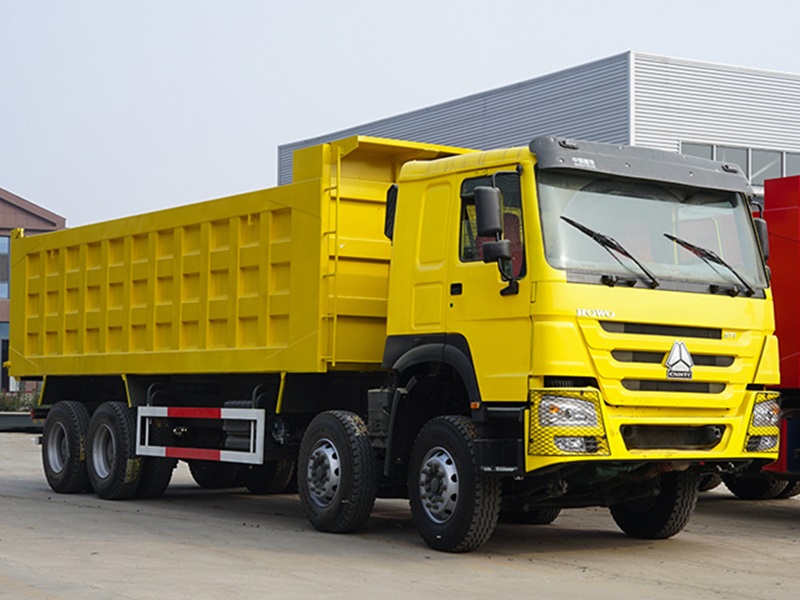
A good used dump truck is not simply the unit with the lowest purchase price or the newest paint. Buyers should define the operating cycle, legal payload, road condition, gradient, climate, daily hours, local parts capability, and destination-country requirements before selecting a chassis. The truck should then pass a documented inspection of its identity, engine, cooling, transmission, driveline, axles, steering, brakes, suspension, frame, tipping hydraulics, body, tires, electrical system, cabin, safety equipment, road performance, refurbishment work, export documents, and loading plan. Snail Truck recommends comparing evidence from the same inspection conditions rather than comparing sales descriptions alone.
Dump trucks work in environments where loading shock, abrasive material, uneven roads, steep grades, dust, heat, and repeated tipping cycles can expose weaknesses quickly. A truck that appears acceptable during a short yard demonstration may overheat on a long climb, pull to one side under braking, leak hydraulic oil after repeated tipping, or develop frame movement when it is fully loaded. That is why procurement teams need an inspection method tied to the intended duty rather than a generic statement such as “good condition.”
This guide is for contractors, miners, aggregate producers, fleet owners, distributors, and importers evaluating used dump trucks for sale. It explains what to request before quotation, how to compare 6x4 and 8x4 configurations, how to inspect a truck in 30 practical areas, and how to turn inspection findings into a commercial decision. The objective is not to promise that every used truck is risk-free. The objective is to make condition, refurbishment scope, delivery responsibility, and remaining uncertainty visible before money and shipping capacity are committed.
A purchase specification is a written description of the job, operating environment, legal limits, required configuration, acceptance criteria, and commercial boundaries that every supplier must quote against.
Price comparisons are unreliable when suppliers quote different preparation levels. One offer may include tires, repairs, maintenance, export documents, inland transport, and port delivery, while another covers only the yard-condition truck. The lower figure can become the higher landed cost after missing work is added.
Begin with the work cycle. Record the material, average and maximum payload, loading equipment, one-way distance, road surface, maximum gradient, altitude, ambient temperature, rain or dust exposure, number of trips per shift, daily operating hours, and expected service life. A quarry truck making short cycles on steep unpaved roads faces a different duty from a construction truck moving soil through urban roads. The correct axle configuration, horsepower, cooling package, body volume, tires, braking system, and maintenance plan may therefore differ.
Define the destination market: drive side, axle and gross-weight limits, dimensions, emissions, lighting, registration documents, inspections, and modification rules. A mechanically useful truck can still be commercially unusable if it cannot be registered or legally loaded.
A practical request for quotation should include the following:
Required brand or acceptable brand range.
6x4 or 8x4 preference and the reason for that preference.
Target horsepower and engine family.
Transmission type and number of forward gears.
Rated or legal payload required in the destination market.
Body volume, internal dimensions, steel thickness, tailgate type, and material carried.
Maximum road gradient, haul distance, and daily operating hours.
Left-hand or right-hand drive.
Emission standard and registration-document requirements.
Acceptable year, mileage or engine hours, where reliable records are available.
Required refurbishment scope, tires, spare parts, tools, and warranty.
Destination port, delivery term, inspection method, and shipment deadline.
When these facts are missing, a supplier can only recommend a general stock unit. When they are available, Snail Truck can compare current inventory against a defined operating envelope and identify where a proposed truck meets, exceeds, or fails the requirement.
The terms 6x4 and 8x4 describe the number of wheel positions and driven wheel positions in a truck configuration, but the practical choice depends on axle loading, traction, maneuverability, body size, road limits, and project productivity.
A 6x4 dump truck commonly uses one front steering axle and two rear driven axles. It is widely selected for construction, quarry, earthmoving, and regional haulage because it balances traction, maneuverability, weight, maintenance complexity, and body capacity. An 8x4 commonly adds another steering or load-carrying axle, allowing a longer chassis and potentially larger body while distributing weight across more axles. The additional axle does not automatically create a higher legal payload; national axle limits and gross-weight regulations determine the usable result.
| Decision Factor | 6x4 Dump Truck | 8x4 Dump Truck | Buyer Check |
|---|---|---|---|
| Typical project fit | Construction, quarry work, shorter haul cycles, constrained sites, mixed roads | Higher-volume road haulage, large construction projects, applications requiring load distribution | Match the configuration to the actual route and legal weight |
| Maneuverability | Generally shorter and easier to turn in restricted areas | Longer wheelbase may need more turning space | Measure gate width, loading area, tipping area, and turning radius |
| Traction | Two driven rear axles provide strong traction for many off-road duties | Often two driven rear axles with additional front load support | Check tire pattern, differential condition, axle ratios, and road surface |
| Body capacity | Commonly configured for moderate to heavy payloads | Can support a longer or larger body where regulations permit | Compare payload by mass, not body volume alone |
| Maintenance | Fewer axle and steering components than an 8x4 | Additional axle, tires, brakes, steering joints, and alignment points | Include parts and tire cost in lifecycle analysis |
| Road legality | Depends on local axle and gross-weight rules | May distribute weight more effectively but is still regulation-dependent | Obtain a destination-country legal review before ordering |
| Shipping footprint | Usually shorter and may be easier to stow | Longer length can affect vessel space and inland transport | Confirm measured dimensions and shipping method for each unit |
Snail Truck’s public product information describes used dump truck options with payload ranges commonly stated around 20 to 40 tons, depending on model and configuration. This range should not be treated as a universal legal payload. The usable value must be confirmed from the exact chassis, body, curb weight, axle ratings, tire ratings, destination-country law, and any modifications made during refurbishment.
Do not select an 8x4 only because it looks larger. If the project has narrow haul roads, tight loading areas, soft ground, short cycles, or limited parts support, a suitable 6x4 may deliver better availability. Conversely, a project with longer roads, high daily volume, legal axle-load constraints, and adequate turning space may benefit from an 8x4. The decision should be based on tons moved per operating hour after delays, fuel, tires, loading time, maintenance, and legal restrictions are included.
A 30-point inspection framework is a repeatable method that checks truck identity, safety, structure, powertrain, hydraulics, body, controls, documentation, and performance under defined conditions before acceptance.
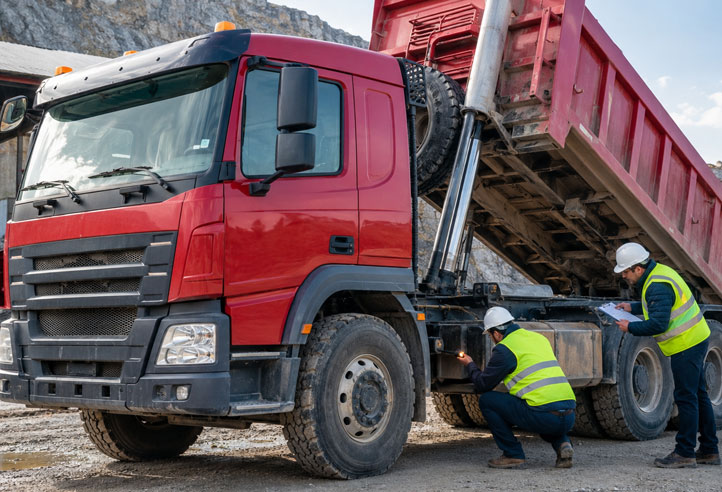
The following framework is designed for procurement screening and supplier communication. It does not replace a destination-country statutory inspection or an independent engineer where one is required. As an external benchmark, U.S. commercial vehicle rules require drivers to be satisfied that a vehicle is in safe operating condition before use, and the U.S. periodic-inspection framework calls for inspection at least once every 12 months. U.S. minimum inspection categories include brakes, steering, lighting, tires, coupling devices, wheels and rims, and emergency equipment. Buyers in other markets must follow their own laws, but the principle is useful: safety systems should be assessed systematically, not inferred from appearance.
Confirm the chassis number or VIN, engine number where applicable, model, year, axle configuration, plate data, registration or cancellation documents, and ownership/export status. The numbers on the vehicle should match the quotation, inspection report, invoice, packing list, and export documents. Photograph identification plates clearly and record any replaced cab, engine, transmission, or major assembly.
Ask for a genuine cold start after the engine has rested. Record ambient temperature, battery condition, cranking time, starting assistance, exhaust smoke, warning lights, unusual noise, and time to stable idle. A warm engine can hide hard starting, injector leakage, low compression, weak batteries, or cold oil-pressure behavior.
Check levels, color, odor, contamination, filler-cap deposits, leaks, hose condition, coolant concentration, radiator cleanliness, fan, belts, and expansion tank. Oil in coolant, coolant in oil, continuous bubbles, excessive pressure, or unexplained top-up requirements need investigation. A single clean sample is not proof of internal condition if fluids were recently changed.
Listen at idle and under controlled acceleration. Check for knocking, irregular combustion, turbo whistle changes, exhaust leaks, and excessive crankcase pressure. Smoke interpretation depends on temperature, load, fuel, altitude, and engine design. Short videos should include the instrument panel and exhaust, but a loaded road test is more informative than free revving.
A dump truck can appear normal in the yard and overheat during a long climb. Inspect radiator fins, coolant hoses, water-pump area, fan drive, shroud, intercooler, and evidence of previous overheating. During road testing, monitor temperature during acceleration, climbing, idling after load, and tipping cycles. Confirm the cooling package is suitable for the destination climate and dust level.
Inspect air-filter housing, restriction indicator, intake hoses, clamps, intercooler pipes, turbo oil leakage, shaft-play indicators, exhaust joints, and aftertreatment components where fitted. Dust leakage downstream of the air filter is a serious concern in mining and quarry service. Confirm which emission equipment is present and whether it can be legally registered and serviced in the destination.
Check clutch take-up, slip, engagement noise, pedal travel, gear selection, synchronizer behavior, high and low range, reverse, transmission oil leakage, mounts, and shift linkage. Test under load on level ground and a gradient where safely possible. A transmission that shifts well without load may jump out of gear or overheat during hauling.
Inspect shafts, splines, universal joints, center bearings, guards, balance weights, flange bolts, grease points, and signs of contact or bending. Excessive play or missing balance weights can create vibration that damages transmissions, bearings, and differentials. Confirm that replaced shafts have correct length and phasing.
Check axle housings, hubs, seals, breathers, differential oil, wheel-end temperature after a road test, and abnormal noise during acceleration and coast. Verify axle ratios if the project requires a particular speed, gradeability, or tire size. Mixed axle ratios or incorrect tire diameters can damage the driveline.
Confirm inter-axle and cross-axle lock functions where installed. Check switches, warning indicators, pneumatic or electrical actuation, and disengagement. Explain correct use to operators; driving on high-traction surfaces with locks engaged can damage components.
Inspect steering box, pump, reservoir, hoses, drag link, tie rods, kingpins, steering column, wheel free play, and leakage. During the road test, observe straight-line stability, return-to-center behavior, vibration, pull, and response over bumps. Alignment problems can indicate worn joints, bent components, frame issues, or tire mismatch.
Check compressor build-up, air dryers, tanks, lines, chambers, slack adjusters, drums or discs, linings or pads, ABS components, warning lamps, and leakage. Perform a controlled brake test according to safe local procedures. Braking should be straight and progressive, with no abnormal delay, pull, vibration, overheating, or pressure loss.
Verify parking-brake holding on a suitable gradient and confirm emergency functions, warning devices, and spring-brake release procedures. Inspect wheel chocks and emergency equipment where required. A parking brake should not be accepted merely because the dashboard indicator illuminates.
Inspect leaf springs, pins, bushes, shackles, U-bolts, equalizers, balance shafts, torque rods, shock absorbers, air suspension where fitted, and chassis mounting points. Look for broken leaves, movement marks, nonstandard welds, loose fasteners, and uneven ride height. Heavy loading can make small suspension defects develop rapidly.
Clean enough of the frame to inspect rails, crossmembers, body mounts, suspension brackets, steering areas, and high-stress transitions. Look for cracks, corrosion, deformation, drilled holes, heat marks, plates, poor welds, and misalignment. Repairs are not automatically unacceptable, but their location, method, documentation, and effect on strength must be evaluated.
Inspect floor, sidewalls, headboard, tailgate, hinges, locking mechanism, ribs, wear plates, canopy, and body-to-subframe connections. Measure internal dimensions and verify the material and thickness agreed in the quotation. A large body designed for low-density material can overload the chassis when filled with dense rock.
Check cylinder type, rod surface, seals, pins, bushes, trunnions, mounts, hoses, fittings, and evidence of side loading. Extend and lower the body several times while observing smoothness, leakage, movement, and stability. Never work under a raised body without the approved mechanical support and lockout procedure.
Engage the power take-off according to the manufacturer’s procedure. Check pump noise, oil level, reservoir, filters, hoses, control valve, pressure relief, control response, and disengagement. Confirm that the body raises within an agreed test condition and remains stable without uncontrolled drift. Cycle time by itself is not a quality measure; oil temperature and system pressure also matter.
Test on firm, level ground with an exclusion zone. Confirm body alignment, hinge movement, tailgate release, locking, and lowering control. A truck that tips unevenly, twists, or requires manual intervention may have frame, subframe, cylinder, hinge, or load-distribution problems. Loaded tipping tests require a formal safety plan.
Inspect rim type, cracks, deformation, corrosion, stud holes, nuts, seating, and compatibility. Check for missing or mismatched components and evidence of repeated loosening. Wheel condition is a safety-critical item and should be assessed from both sides where access permits.
Record brand, size, tread depth, pattern, casing damage, repairs, sidewall cracks, age code where available, pressure, and matching across each axle. New-looking tread does not always mean a new casing. Confirm whether the quotation includes new tires, retreaded tires, mixed used tires, or a specified remaining tread standard.
Test batteries, terminals, isolation switch, starter, alternator output, grounding, main cables, fuses, and charging warning. Look for temporary wiring, overheated connections, unsupported cables, and corrosion. Electrical reliability is especially important where local diagnostic tools and parts are limited.
Verify headlights, indicators, brake lights, reverse lights, beacons, work lamps, horn, wipers, washers, gauges, hour or mileage display, warning lamps, reverse alarm, and any body-raised warning. Confirm that warning lamps illuminate during self-test and extinguish appropriately; removed bulbs can hide faults.
Inspect structural condition, doors, locks, glass, mirrors, seat mounting, seat belts, pedals, HVAC, controls, and fire extinguisher or other required equipment. Cabin refurbishment should improve safe operation, not only appearance. Confirm that replacement trim, switches, and gauges function correctly.
Check tanks, straps, caps, lines, filters, water separator, leakage, return lines, and contamination. Ask whether the engine fuel system is compatible with local fuel quality and what filtration or water-separation maintenance is recommended. A freshly painted tank can still contain rust or sediment.
A road test should include cold start, acceleration, gear changes, steering, braking, gradient response, driveline noise, vibration, temperature, smoke, and post-test leakage inspection. Record route, duration, approximate load, ambient condition, and driver observations. Where a full-load test is not possible, state the limitation clearly.
Use compatible diagnostic equipment when available. Record active and stored faults, engine hours, relevant counters, sensor values, and whether codes return after the road test. Deleting codes before inspection does not repair the cause. The offered truck should be evaluated from current condition and repeat behavior.
Request a work list showing what was inspected, repaired, adjusted, replaced, or left as-is. Identify critical parts, brands or quality grades where relevant. Before-and-after photographs, job cards, measurements, and road-test records are stronger evidence than a general “fully refurbished” statement.
Confirm invoice description, packing list, chassis numbers, ownership or cancellation documents, certificate requirements, inspection certificates, country of origin where applicable, and destination-specific documents. The physical truck, quotation, inspection report, and shipping documents must describe the same unit and configuration.
Measure overall length, width, height, and weight after final preparation. Confirm fuel level, battery isolation, loose accessories, spare parts packing, anti-corrosion protection, cab and body securing, lifting or lashing points, and destination handling. Photograph each truck immediately before loading and record keys and documents handed over.
Condition grading classifies findings by safety, legality, operational impact, repair cost, evidence quality, and urgency so that the buyer can make a controlled acceptance decision.
Not every finding has the same consequence. A worn seat cover and a cracked brake component should not appear as equivalent items on a checklist. Use a risk-based grading system:
Grade A — Acceptable: Meets the written requirement with evidence and no immediate corrective action.
Grade B — Service item: Normal maintenance or minor adjustment required before delivery or within a defined operating interval.
Grade C — Repair before acceptance: Material defect affecting reliability, productivity, compliance, or agreed condition; repair method and retest required.
Grade D — Safety or legal stop: Truck must not be accepted or operated until the issue is corrected and independently verified where appropriate.
Grade U — Unknown: Evidence is insufficient, testing was not possible, or records conflict; commercial allowance or additional inspection is required.
Every Grade C, D, or U item should have an owner, corrective action, completion date, proof, and retest result. The purchase contract can state whether Snail Truck repairs the issue, replaces the truck, changes the price, supplies parts, or records an accepted deviation. This is more useful than negotiating from photographs after the truck has arrived.
Brand comparison is the process of matching available chassis families, parts support, technician familiarity, configuration, condition, and total operating cost to a specific fleet rather than declaring one brand universally best.
HOWO, SHACMAN, and HOHAN used dump trucks can all serve heavy construction and transport applications, but the best option depends on current inventory and the buyer’s service environment. A fleet that already operates one engine and transmission family may gain more from parts commonality and technician knowledge than from switching to a theoretically attractive specification.
For buyers focused on a HOWO dump truck for sale, compare the exact engine, transmission, axle, cab, body, year, condition, and refurbishment scope rather than relying on the HOWO name alone. The same rule applies to SHACMAN and HOHAN. Two trucks with the same badge can have different horsepower, axle ratios, emissions equipment, cooling packages, body sizes, previous duties, and remaining component life.
| Comparison Area | Questions for HOWO | Questions for SHACMAN | Questions for HOHAN | Decision Method |
|---|---|---|---|---|
| Local familiarity | Are HOWO engines, gearboxes, axles, and diagnostics already supported? | Are SHACMAN-compatible parts and technicians available? | Can the local service network support the offered HOHAN configuration? | Score parts lead time, technician capability, tooling, and fleet commonality |
| Exact configuration | 6x4/8x4, horsepower, transmission, axle ratio, body | 6x4/8x4, horsepower, transmission, axle ratio, body | 6x4/8x4, horsepower, transmission, axle ratio, body | Compare against the same operating specification |
| Condition evidence | Cold start, scan, road test, chassis, hydraulics | Cold start, scan, road test, chassis, hydraulics | Cold start, scan, road test, chassis, hydraulics | Use one inspection template and one grading standard |
| Refurbishment scope | Parts replaced, measurements, paint, tires, retest | Parts replaced, measurements, paint, tires, retest | Parts replaced, measurements, paint, tires, retest | Price the remaining work and uncertainty |
| Commercial support | Warranty, spare parts, manuals, remote support | Warranty, spare parts, manuals, remote support | Warranty, spare parts, manuals, remote support | Compare written terms, exclusions, response, and evidence |
The conclusion may differ by project: HOWO for fleet commonality, SHACMAN for an available specification, or HOHAN for a particular price-condition combination. The purchasing standard should remain constant.
Refurbishment is a documented process of inspection, repair, replacement, adjustment, cleaning, painting, testing, and final acceptance intended to bring a used truck to an agreed delivery condition.
Refurbishment is valuable when it addresses the causes of downtime and records what was done. Cosmetic work alone may improve presentation without improving braking, cooling, drivetrain, hydraulics, or structural condition. Buyers should therefore ask for the process and evidence behind the final appearance.
Snail Truck describes a multi-step refurbishment approach for used heavy-duty trucks. A robust project-specific version should cover identity verification, initial inspection, powertrain assessment, chassis and suspension, braking and steering, electrical systems, cabin, dump hydraulics and body, tires and fluids, road testing, final inspection, and shipment preparation. The exact work should vary with the truck’s condition rather than applying the same parts replacement to every unit.
Useful refurbishment evidence includes:
Initial condition photographs and fault list.
Diagnostic report before and after work.
Compression, pressure, temperature, leakage, or dimensional measurements where applicable.
Work order with part numbers or part descriptions.
Photographs of major repairs before areas are closed or painted.
Fluid and filter replacement record.
Brake, steering, tire, hydraulic, electrical, and safety checks.
Road-test route, duration, load condition, and results.
Final inspection signed against the purchase specification.
The website states that used trucks can provide substantial savings compared with new units and gives examples of savings that may reach 50 percent or approximately USD 15,000 to USD 25,000 per truck in some cases. These are company-level marketing examples, not guaranteed savings for every unit. The buyer should compare the exact delivered price, remaining service life, repairs, fuel, tires, downtime, financing, import charges, and resale value.
Lifecycle cost is the sum of acquisition, preparation, transport, import, operation, maintenance, downtime, and disposal costs over the truck’s planned ownership period.
A low equipment price can be offset by high tire use, cooling failures, hydraulic leakage, weak parts support, excessive fuel consumption, or long downtime. A more expensive truck may be the better purchase if it is correctly configured, has stronger evidence, needs less immediate work, and shares parts with the existing fleet.
Use a project model with the following categories:
Truck purchase price and included refurbishment.
Independent inspection and testing.
Inland transport, port handling, ocean freight, insurance, and destination handling.
Import duty, taxes, registration, modifications, and compliance inspection.
Initial spare-parts package, tools, manuals, and training.
Fuel and lubricant cost per operating hour or per ton moved.
Tires and wear parts.
Preventive maintenance labor and parts.
Expected repairs based on condition grading.
Downtime cost, replacement equipment, and lost production.
Operator productivity and loading-cycle efficiency.
Resale or residual value at the end of the planned period.
Calculate at least three scenarios: expected, favorable, and adverse. The adverse scenario should include a major component repair, shipping delay, or lower availability. A purchase that only works financially under the most optimistic assumptions is not robust. Snail Truck can support the equipment and preparation inputs, while the buyer should supply local fuel, labor, parts, tax, and downtime values.
Supplier evidence is the set of company, vehicle, process, inspection, commercial, and export records that allows a buyer to verify who is selling the truck, what is being sold, and how acceptance will be controlled.
Before payment, verify the legal company identity, physical operating location, bank beneficiary, quotation validity, stock ownership or authority to sell, and communication contacts. For each truck, obtain a unit-specific data sheet and current photographs showing identification numbers. Avoid relying only on catalogue photos or a video that does not show the offered unit.
Request a commercial package containing:
Proforma invoice with chassis numbers or a process for assigning them.
Detailed specification and condition description.
Included and excluded refurbishment work.
Inspection method, acceptance criteria, and responsibility for rework.
Payment milestones connected to evidence and acceptance.
Delivery term, destination port, estimated schedule, and delay communication.
Warranty scope, duration, exclusions, claim procedure, and parts responsibility.
Spare parts, tools, manuals, and training included.
Export and destination documents supplied.
Dispute resolution and change-control procedure.
The Snail Truck website states that the business was founded in 2016, operates a large truck trading base, has exported to more than 89 countries, and has annual export capacity of 10,000 trucks. These figures can help a buyer understand claimed scale, but due diligence should still use the current contract, exact unit evidence, bank verification, and shipment records relevant to the transaction.
Final acceptance is the documented decision that the offered truck meets the agreed specification, approved deviations, safety requirements, and shipment condition before release.
Inspection options can include buyer visit, third-party inspector, live video inspection, recorded test package, or a combination. A live video should follow a pre-agreed script and show the truck identity continuously where possible. Ask the operator to demonstrate cold start, instruments, lights, steering, brakes, transmission, differential locks, tipping cycles, leaks, tires, chassis, body, and road test. Randomly selected close-ups are more reliable than a polished promotional sequence.
Independent inspectors need a clear scope. A generic “check the truck” instruction may produce only photographs and basic observations. Provide the purchase specification, 30-point checklist, required measurements, grading rules, test conditions, document list, and defect-closeout process. Define whether the inspector is verifying visual condition, conducting mechanical tests, witnessing supplier tests, or confirming documents.
Final acceptance should not be inferred from silence. Use an acceptance record listing all trucks, chassis numbers, open items, approved deviations, documents, spare parts, keys, and loading status. Photographs immediately before shipment protect both buyer and supplier by establishing the handover condition.
These frequently asked questions address common procurement, inspection, configuration, refurbishment, and shipping concerns raised by buyers of used dump trucks.
Neither is universally better. A 6x4 is often easier to maneuver and has fewer axle-related components, while an 8x4 can distribute weight across more axles and support a longer chassis where local rules allow. Choose from legal payload, road width, turning space, gradient, surface, cycle distance, loading equipment, body size, maintenance capability, and shipping dimensions. Compare productivity per hour under the project conditions rather than body size alone.
Capacity depends on the exact chassis, axle ratings, tires, body, curb weight, road law, and material density. Snail Truck product information commonly presents options in an approximate 20–40-ton payload range, but this should not be treated as the legal capacity of every model. Obtain the vehicle plate data, body volume, measured curb weight where available, and destination-country axle and gross-weight limits before confirming payload.
Yes, paint can conceal corrosion, cracks, repairs, leaks, and mismatched panels if inspection occurs only after finishing. Refurbishment is not automatically suspicious, but the buyer should request initial-condition photos, repair records, close-up inspection of high-stress frame and body areas, and evidence before painting. Mechanical tests, diagnostic scans, cold start, tipping cycles, and road tests are more informative than appearance.
It should include cold start, idle, acceleration, all practical gears, steering response, braking, gradient behavior, vibration, differential-lock operation where safe, temperature, smoke, warning lights, and post-test checks for fluid leaks and wheel-end heat. Record route, time, approximate load, ambient condition, and limitations. A short yard movement is not equivalent to a representative road test.
Not without comparing the same delivery condition and lifecycle assumptions. Add refurbishment, tires, inspection, shipping, import, initial repairs, fuel, maintenance, downtime, parts lead time, and resale value. A lower purchase price may remain attractive, but only when the condition, risk, and missing work are visible. Use expected and adverse cost scenarios before approving the purchase.
Send the material, target payload, daily volume, haul distance, road surface, maximum gradient, climate, operating hours, preferred 6x4 or 8x4 configuration, horsepower, emission requirement, left-hand or right-hand drive, acceptable brands, quantity, destination country and port, budget, shipment timing, and required inspection or warranty. This lets Snail Truck match current stock to the project instead of offering a generic unit.
Definition: A successful used dump truck purchase is one in which the truck’s configuration, measured condition, refurbishment scope, legal suitability, shipment plan, and lifecycle cost are aligned with the buyer’s real operating duty.
The buying process begins before truck selection. Define the job and destination, compare 6x4 and 8x4 against route, payload, maneuverability, maintenance, and law, then inspect every unit through the same 30-point framework. Grade findings by risk and connect repairs to evidence and retesting. Compare brands on exact configuration and local support.
Snail Truck positions itself as a global source of used heavy duty trucks for sale and can support stock matching, refurbishment, inspection evidence, export preparation, and shipping coordination. The most efficient first step is to send a complete application and destination profile. Request current stock, unit-specific videos, the refurbishment scope, and a written comparison of two or three trucks under the same acceptance standard. That turns a broad search for used dump trucks into a controlled fleet investment.
The following external references provide general commercial-vehicle inspection and dump-truck background; destination-country law and project-specific engineering requirements must also be checked.
1. U.S. Federal Motor Carrier Safety Administration, Pre-Trip Inspection: https://csa.fmcsa.dot.gov/safetyplanner/MyFiles/SubSections.aspx?ch=22&sec=65&sub=148
2. U.S. Federal Motor Carrier Safety Administration, Inspection, Repair, and Maintenance under Part 396: https://www.fmcsa.dot.gov/safety/passenger-safety/inspection-repair-and-maintenance-motor-carriers-passengers-part-396
3. Wikipedia, Dump Truck: https://en.wikipedia.org/wiki/Dump_truck
 English